English

World of Warcraft: Forever is a vast game filled with quests, fearsome enemies, different classes, dungeons, crafting, and plenty of other activities to explore. With so much to discover and learn, getting started can feel a little overwhelming for new players. Whether you're a newcomer or a returning player after a long break, this beginner guide will help you avoid common mistakes, understand the basics, and make your first adventures in Azeroth smoother. Let's get started!
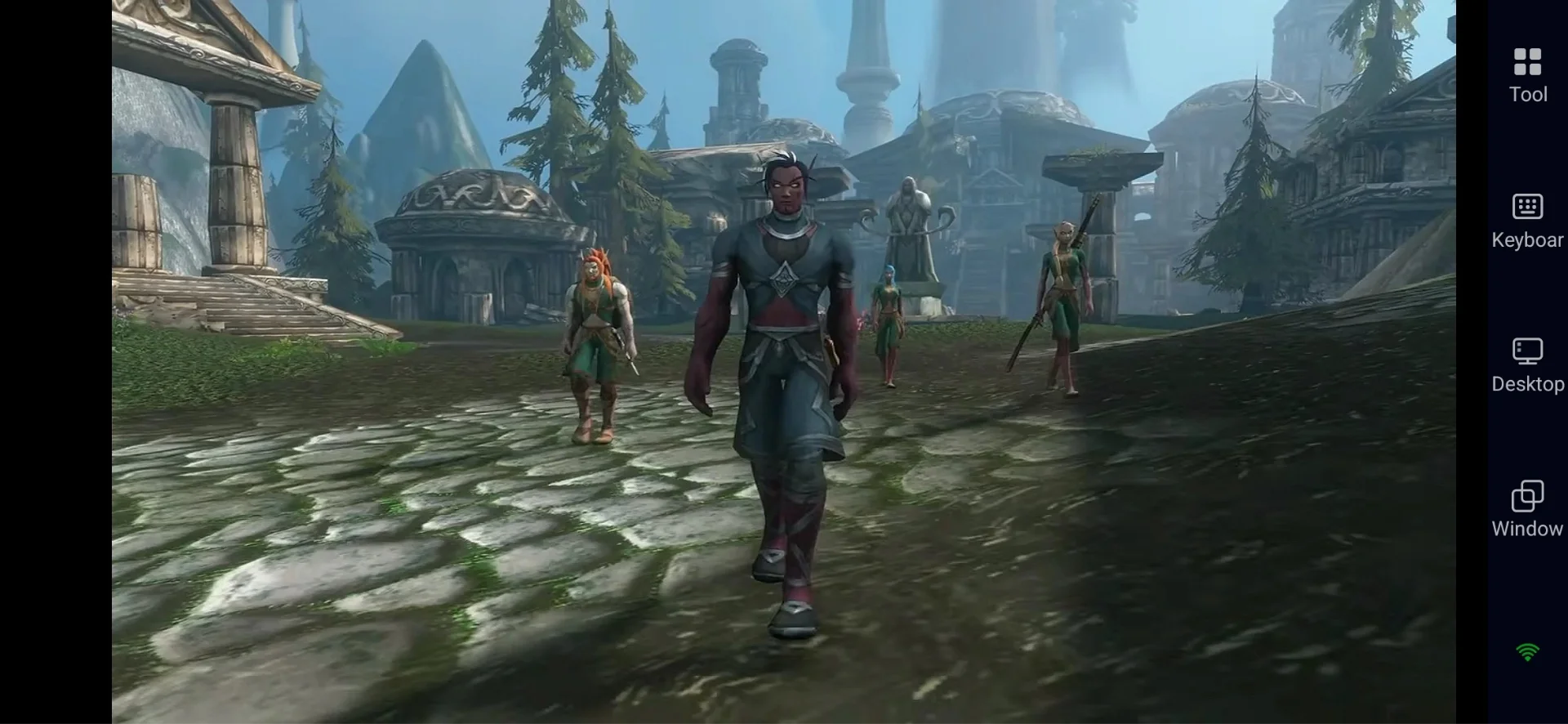
If you'd like to experience Azeroth on the go, you don't have to stay tied to your PC. With OSLink, you can remotely play World of Warcraft: Forever on your mobile, allowing you to continue questing, manage your character, and make progress even when you're away from your computer.
Choose the Right Rule Set Before Creating Your Character
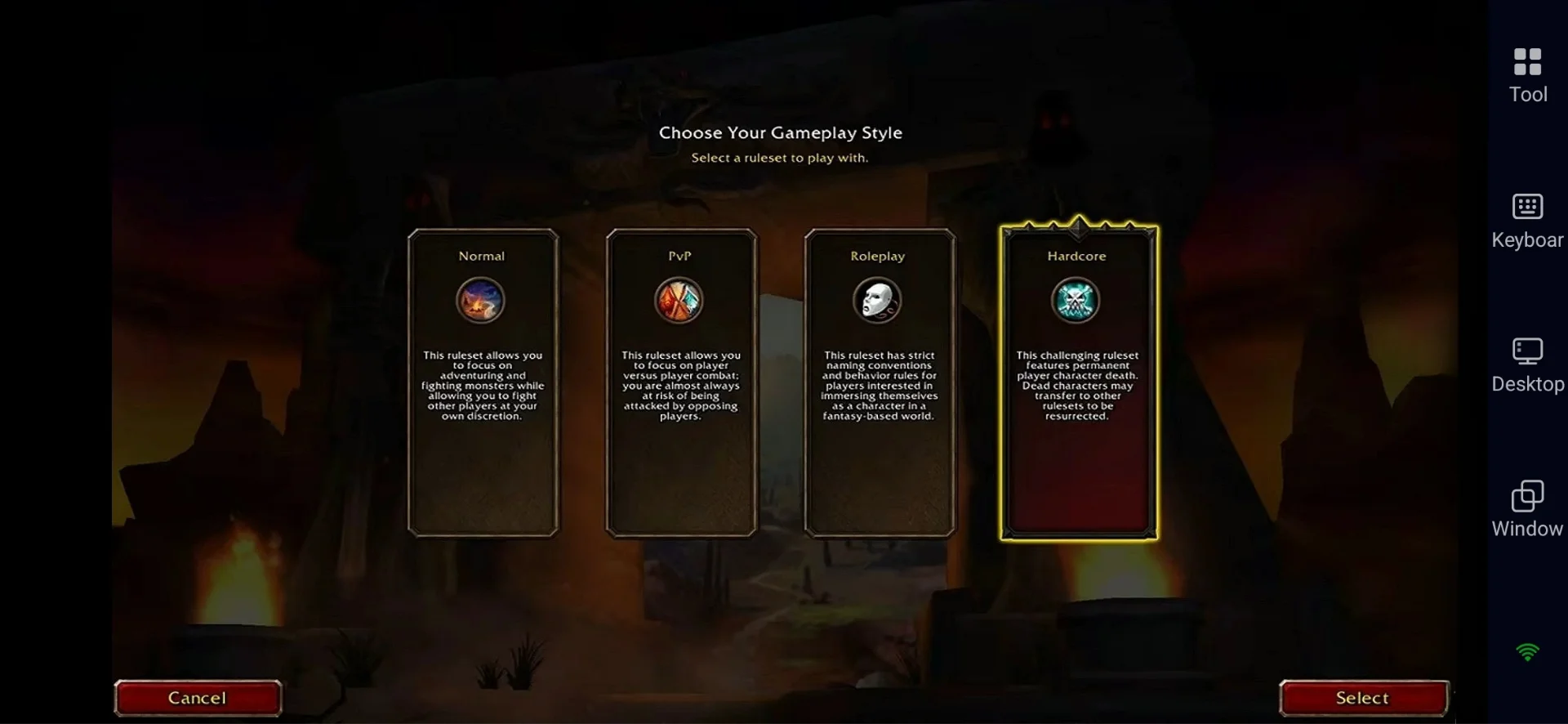
Your first big decision in World of Warcraft: Forever comes before you even create your character. The game asks you to choose a rule set, and this choice is extremely important because it determines which mega-server you will join.
You cannot freely play with people from different rule sets. So, if your friend chooses Normal while you choose PvP, you won't be able to group up and adventure together. The same goes for joining a guild. Make sure you know which server your friends or guild members are playing on before making your choice.
There are four main rule sets to understand:
|
Rule Set |
What to Expect |
|
Normal |
A PvE-focused experience where open-world PvP is opt-in. You can quest, explore, and level without worrying about being attacked by enemy players who have flagged themselves for PvP. |
|
PvP |
Open-world PvP is enabled. Enemy faction players can attack you, so expect unexpected fights while questing and exploring. |
|
Roleplay |
Focuses on character roleplay, fantasy interactions, and creating stories with other players. |
|
Roleplay PvP |
Combines roleplaying with the open-world PvP experience. |
Creating Your First Character: Faction, Race, and Class
The first major decision when creating your character in World of Warcraft: Forever is choosing between the Alliance and the Horde. Each faction has its own races, starting areas, major cities, and quests. More importantly, your faction determines which players you can group with, so it's worth considering before creating your first character.
|
Faction |
Available Races |
|
Alliance |
Humans, Dwarves, Gnomes, Night Elves, and Skyborne |
|
Horde |
Orcs, Undead, Tauren, Trolls, and Skyborne |
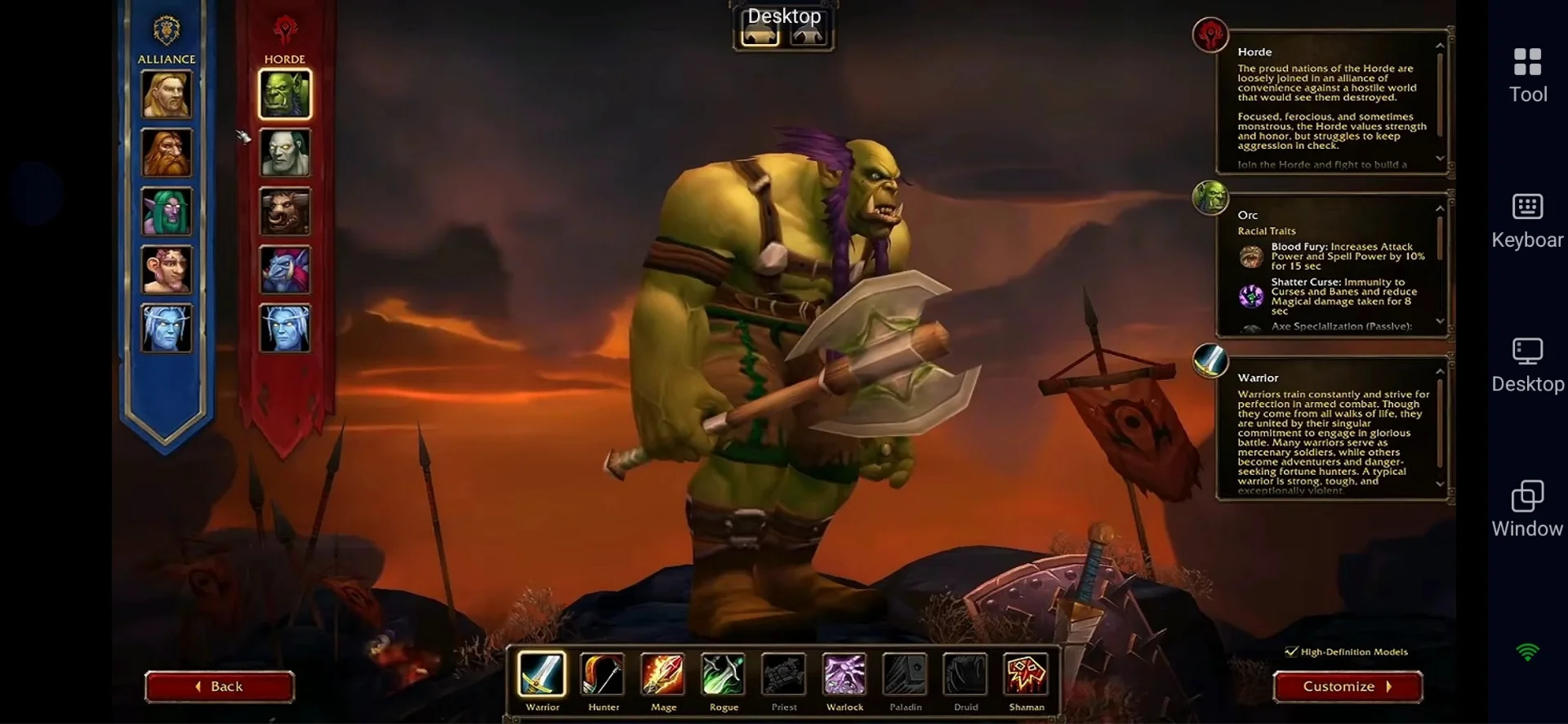
Playing with Friends: Alliance and Horde characters cannot group together, so make sure you choose the same faction as your friends if you plan to quest, run dungeons, or explore Azeroth together. You can create characters for both factions under the normal rules, but PvP characters have additional faction restrictions. In particular, choosing an Alliance character under the PvP rule set prevents you from creating Horde characters.
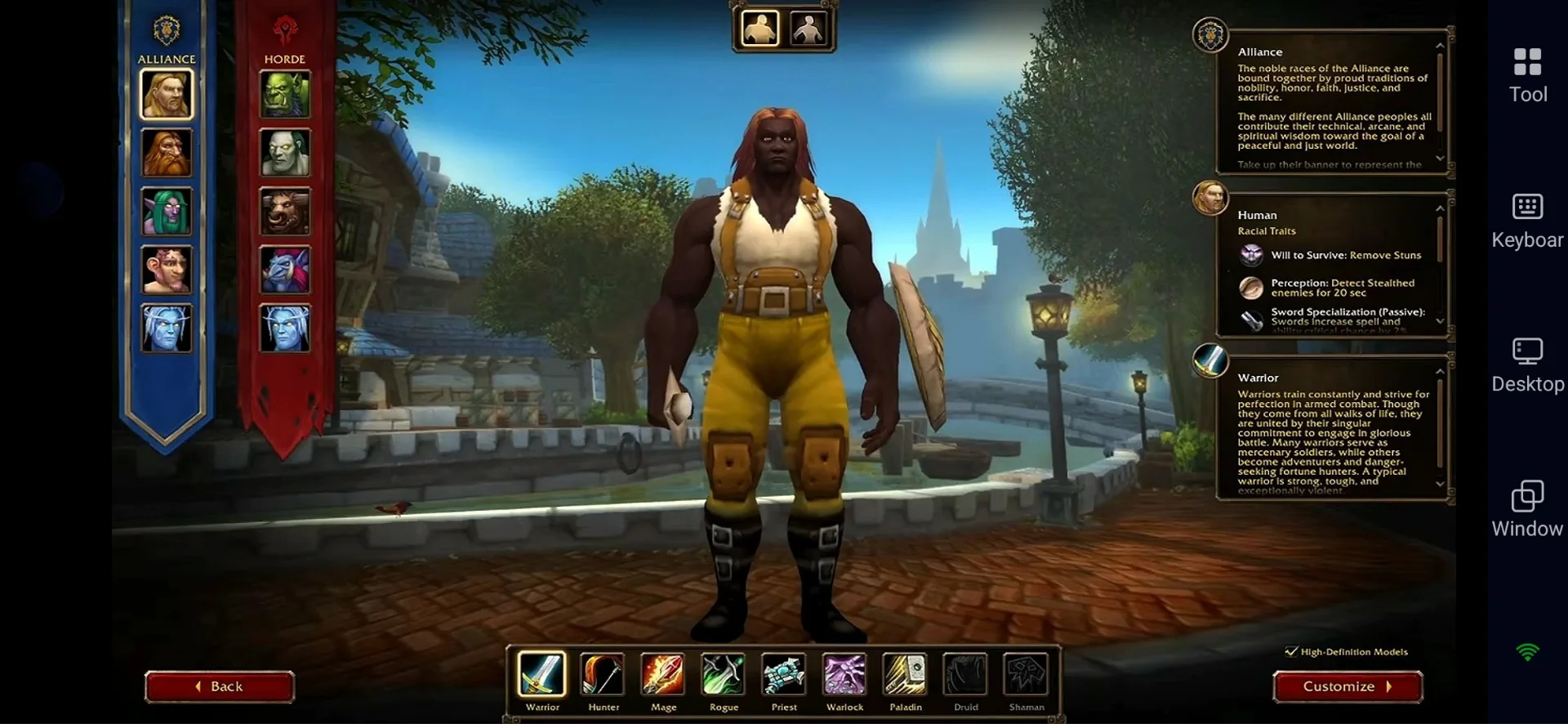
Choosing a Faction for PvP or PvE: Both factions have players who enjoy PvP and PvE, so neither is exclusively focused on one type of content. However, based on our own experience with the community, Alliance players tend to be more competitive and PvP-oriented, while Horde players seem more focused on PvE activities. This isn't a rule, and you'll find friendly, helpful, and competitive players on both sides, but it may be worth considering if you're looking for a particular community atmosphere.
Ultimately, your friends and preferred community should matter more than faction loyalty. If you don't have anyone to play with yet, choose the faction whose races, starting areas, and overall atmosphere appeal to you. You can always create another character later if you want to experience the other side.
Choosing a Race and Understanding Racial Abilities
Your race determines which classes you can play, where your character starts, and which racial abilities you receive. While some races have bonuses that are particularly useful for certain classes or activities, you shouldn't choose a race based on its abilities alone. Your preferred class and starting experience are just as important.
Starting zones also matter when playing with friends. Different races begin in different areas, and some starting zones may not have trainers for every class. If you're leveling with someone who chose a different race, you may need to travel to find the right class trainer.
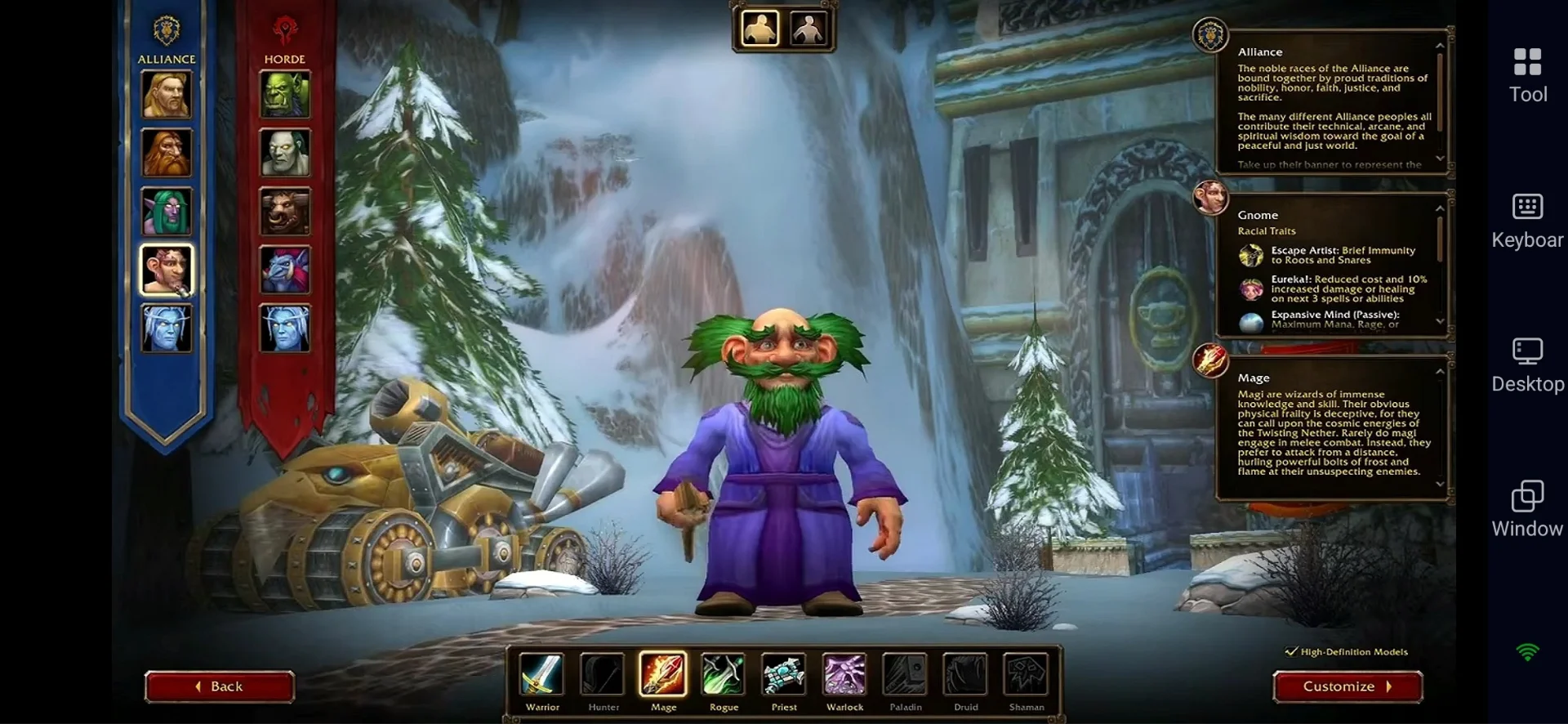
Alliance Races and Their Racial Abilities
Humans
-
Will to Survive: Removes stun effects.
-
Perception: Detects stealthed enemies for 20 seconds.
-
Ruthless (Passive): Increases critical strike chance with spells and attacks by 1%.
-
The Human Spirit (Passive): Increases Spirit by 10%.
Dwarves
-
Stoneform: Grants immunity to bleeds, poisons, and diseases while reducing physical damage taken for 8 seconds.
-
Find Treasure: Tracks nearby treasure chests.
-
Artisan's Precision (Passive): Increases hit chance by 1%.
-
Big Game Hunter (Passive): Increases damage dealt to beasts by 5%.
Night Elves
-
Elune's Light: Increases critical strike chance by 10% for 15 seconds.
-
Shadowmeld: Grants stealth while your character remains stationary.
-
Quickness (Passive): Increases dodge chance by 1% and movement speed by 2%.
-
Wisp Spirit (Passive): Increases movement speed by 75% while dead.
Gnomes
-
Escape Artist: Grants brief immunity to roots and snares.
-
Eureka!: Reduces the cost of your next three spells or abilities while increasing their damage or healing by 10%.
-
Expansive Mind (Passive): Increases maximum mana, rage, or energy by 5%.
-
Engineering Specialization (Passive): Makes Engineering devices more reliable.
Horde Races and Their Racial Abilities
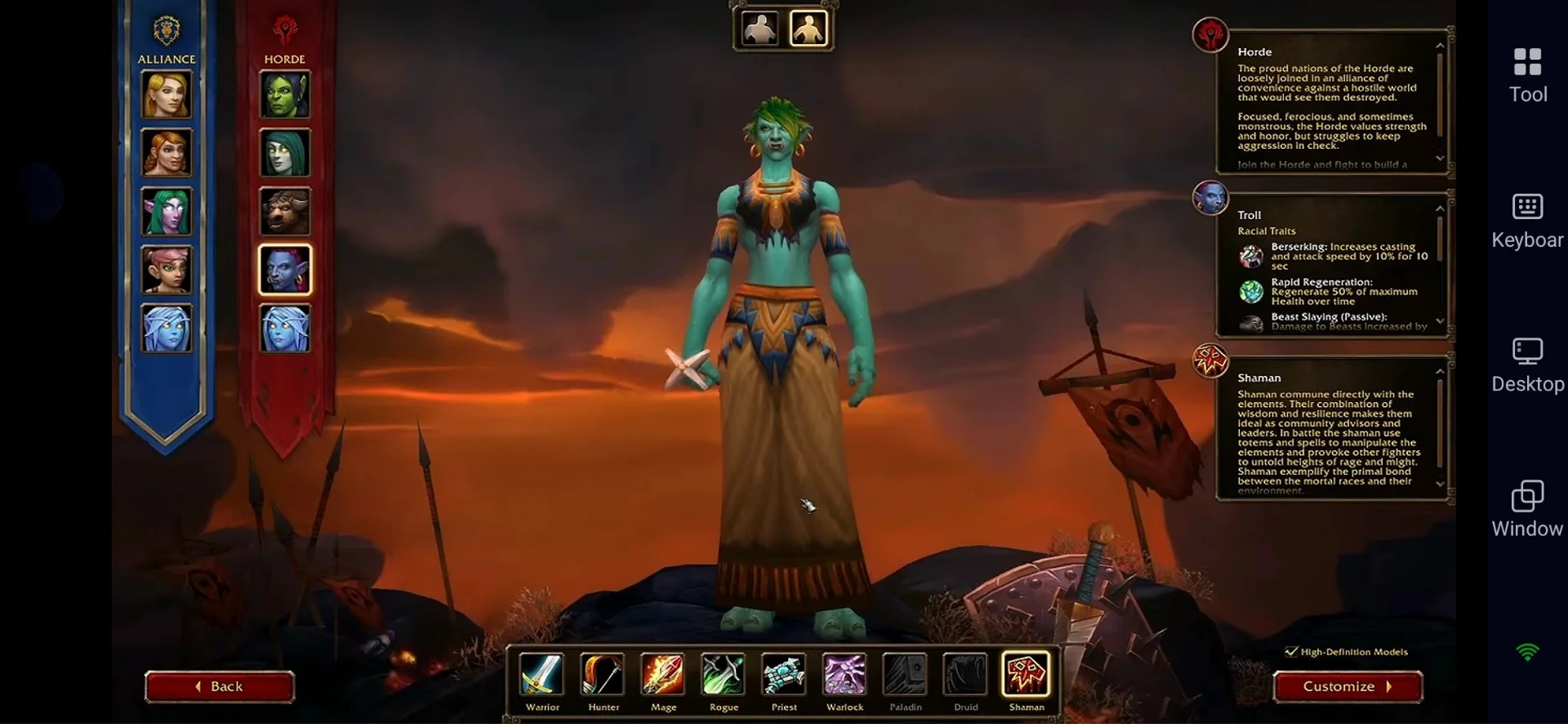
Orcs
-
Blood Fury: Increases attack power and spell power by 10% for 15 seconds.
-
Shatter Curse: Grants immunity to curses and banes while reducing magical damage taken for 8 seconds.
-
Command (Passive): Increases damage dealt by pets and demons by 5%.
-
Hardiness (Passive): Reduces the duration of stun effects affecting you by 20%.
Undead
-
Will of the Forsaken: Removes charm, fear, and sleep effects.
-
Cannibalize: Consumes corpses to regenerate health and mana over time.
-
Underwater Breathing (Passive): Allows you to breathe 300% longer underwater.
-
Touch of the Grave (Passive): Your attacks sometimes drain health.
Tauren
-
War Stomp: Stuns nearby enemies for 2 seconds.
-
Cultivation: Grows bonus herbs that can be gathered without Herbalism.
-
Plainsrunning (Passive): Increases movement speed the longer you keep moving.
-
Endurance (Passive): Increases total health by 5%.
Trolls
-
Berserking: Increases casting and attack speed by 10% for 15 seconds.
-
Rapid Regeneration: Regenerates 50% of maximum health over time.
-
Beast Slaying (Passive): Increases damage dealt to beasts by 5%.
-
Regeneration (Passive): Increases health regeneration by 20% and allows 20% of it to continue during combat.
Skyborne Racial Abilities
Skyborne characters have different racial abilities depending on their faction, although both versions share some bonuses.
Alliance Skyborne
-
Walk on Air: Allows you to glide downward through the air for 10 seconds.
-
Read Leyline: Increases health and mana regeneration by 50% for 15 seconds, or 30% when attuned.
-
Wind Blessed (Passive): Increases melee, ranged, and spellcasting haste by 2%.
-
Elemental Insight (Passive): Increases damage dealt to elementals by 5%.
Horde Skyborne
-
Walk on Air: Allows you to glide downward through the air for 10 seconds.
-
Skysight: Grants an Elemental Blessing that increases movement speed by 15%, or 30% when attuned.
-
Wind Blessed (Passive): Increases melee, ranged, and spellcasting haste by 2%.
-
Elemental Insight (Passive): Increases damage dealt to elementals by 5%.
Which Racial Bonuses Are Worth Considering?
Racial abilities offer different advantages, so the best choice depends on what you want to do with your character.
-
Combat bonuses: Humans, Night Elves, Orcs, and Skyborne have abilities that improve damage or combat performance.
-
Survivability: Dwarves, Orcs, Undead, and Tauren have abilities that help resist certain effects, reduce incoming damage, or improve health recovery.
-
Movement and exploration: Night Elves, Tauren, and Skyborne have movement-related abilities, while Dwarves can track nearby treasure.
-
Class and profession benefits: Gnomes have an Engineering bonus, while Tauren can gather bonus herbs without learning Herbalism.
Don't feel pressured to pick a race simply because it has a particular bonus. Some abilities are more useful in specific encounters or situations, while others provide smaller benefits throughout your adventure. Choose a race that fits your preferred class and playstyle, then treat its racial abilities as an added advantage.
Choosing a Class and Understanding Combat Roles
Your class has a major impact on how you play World of Warcraft: Forever. Some classes focus on dealing damage, while others can protect allies, heal teammates, or switch between several roles. Before choosing one, consider whether you prefer fighting up close, attacking from a distance, using magic, or supporting a group.
Overview of the Available Classes
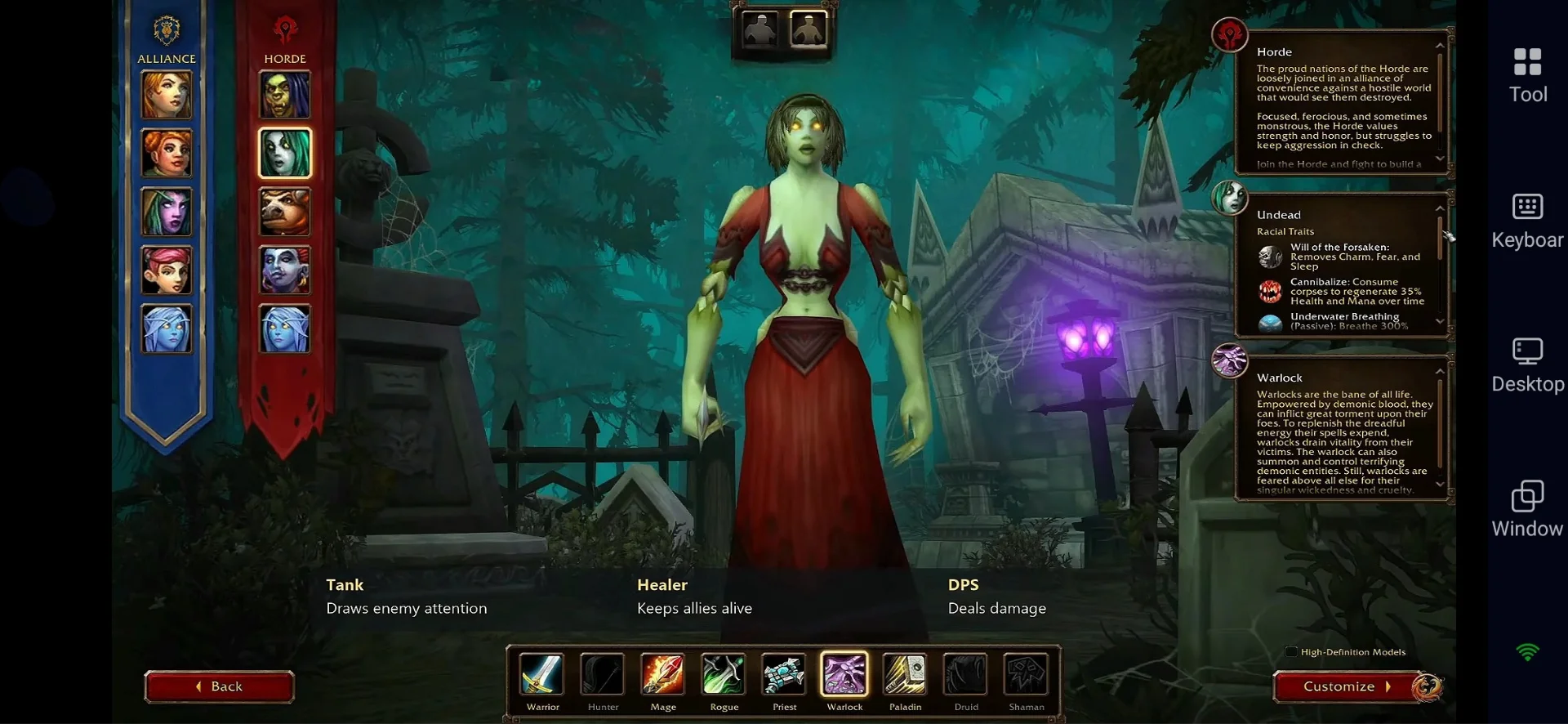
There are nine classes in World of Warcraft: Forever, each with its own abilities and playstyle. Some can fill multiple combat roles, while others specialize in dealing damage.
|
Class |
Available Roles |
Playstyle |
|
Warrior
|
Tank, DPS |
Uses weapons and physical attacks to deal damage or protect allies. |
|
Paladin
|
Tank, Healer, DPS |
Combines melee combat with holy magic, healing, and defensive abilities. |
|
Druid
|
Tank, Healer, DPS |
Uses nature magic and shapeshifting to adapt to different roles. |
|
Priest
|
Healer, DPS |
Uses holy and shadow magic to heal allies or deal damage. |
|
Shaman
|
Healer, DPS |
Uses elemental powers, totems, and nature-based abilities. |
|
Mage
|
DPS |
Specializes in powerful ranged spells and elemental magic. |
|
Warlock
|
DPS |
Uses dark magic, curses, and demonic pets to damage enemies. |
|
Rogue
|
DPS |
Relies on stealth, powerful melee attacks, and poisons. |
|
Hunter
|
DPS |
Uses ranged weapons and pets to deal damage from a distance. |




Classes that can fill multiple roles offer more flexibility, but that doesn't necessarily make them the best choice for everyone. A Warrior, for example, can focus on dealing damage or tanking, while a Priest can specialize in healing or ranged damage. Think about the type of combat you enjoy rather than choosing a class simply because it can perform more roles.
Understanding the Three Main Combat Roles
When joining dungeons and other group activities, you'll generally take one of three roles: Tank, Healer, or Damage Dealer (DPS). Each has different responsibilities, so it's worth understanding them before settling on a class.
|
Role |
Main Responsibilities |
Classes |
|
Tank |
Leads the group, keeps enemies focused on the tank, and absorbs incoming damage. |
Warrior, Paladin, Druid |
|
Healer |
Restores health and keeps group members alive during encounters. |
Priest, Paladin, Druid, Shaman |
|
DPS |
Deals damage to defeat enemies while following encounter mechanics and avoiding unnecessary damage. |
All nine classes |
Tanks are usually responsible for leading the group through dungeons and controlling enemy threat. This means keeping enemies focused on them instead of letting them attack the healer or other damage dealers. Tanks also benefit from knowing dungeon layouts and encounters, although WoW Forever's new dungeons give beginners a good opportunity to learn alongside everyone else.
Healers keep the group alive by restoring health and responding to incoming damage. This role requires you to watch your teammates while keeping track of your available healing abilities. If you queue for a dungeon as a healer, the group will expect you to focus on healing rather than dealing damage.
DPS players focus on defeating enemies while avoiding attacks and following encounter mechanics. Although they still need to understand threat and work with the rest of the group, ranged DPS is generally a less demanding role for beginners than tanking or healing.
Which Role Should Beginners Choose?
If you're new to group content, DPS is generally the easiest role to start with, particularly ranged DPS. You can focus on learning your abilities, understanding enemy mechanics, and dealing damage without having to lead the group or keep everyone alive.
That doesn't mean you should avoid tanking or healing if those roles interest you. WoW Forever introduces nine new dungeons, so even experienced players will be learning their layouts and encounters. This makes it a reasonable time for new players to try tanking without feeling that they must already know every dungeon.
Why Hunter Is a Good Starting Choice
If you're unsure which class to choose, Hunter is worth considering. It uses ranged weapons and pets, allowing you to deal damage from a distance while your companion helps keep enemies occupied. This can make solo questing and exploring more manageable, especially when you're still learning the basics of combat.
Hunter also has a straightforward damage-focused role in groups, so you can concentrate on learning your abilities and dungeon mechanics without taking on the additional responsibilities of a tank or healer.
Ultimately, the best class is the one whose combat style you enjoy. You can always create additional characters later, and the Legacy system gives you another reason to experiment with different classes as you progress.
Questing and Leveling
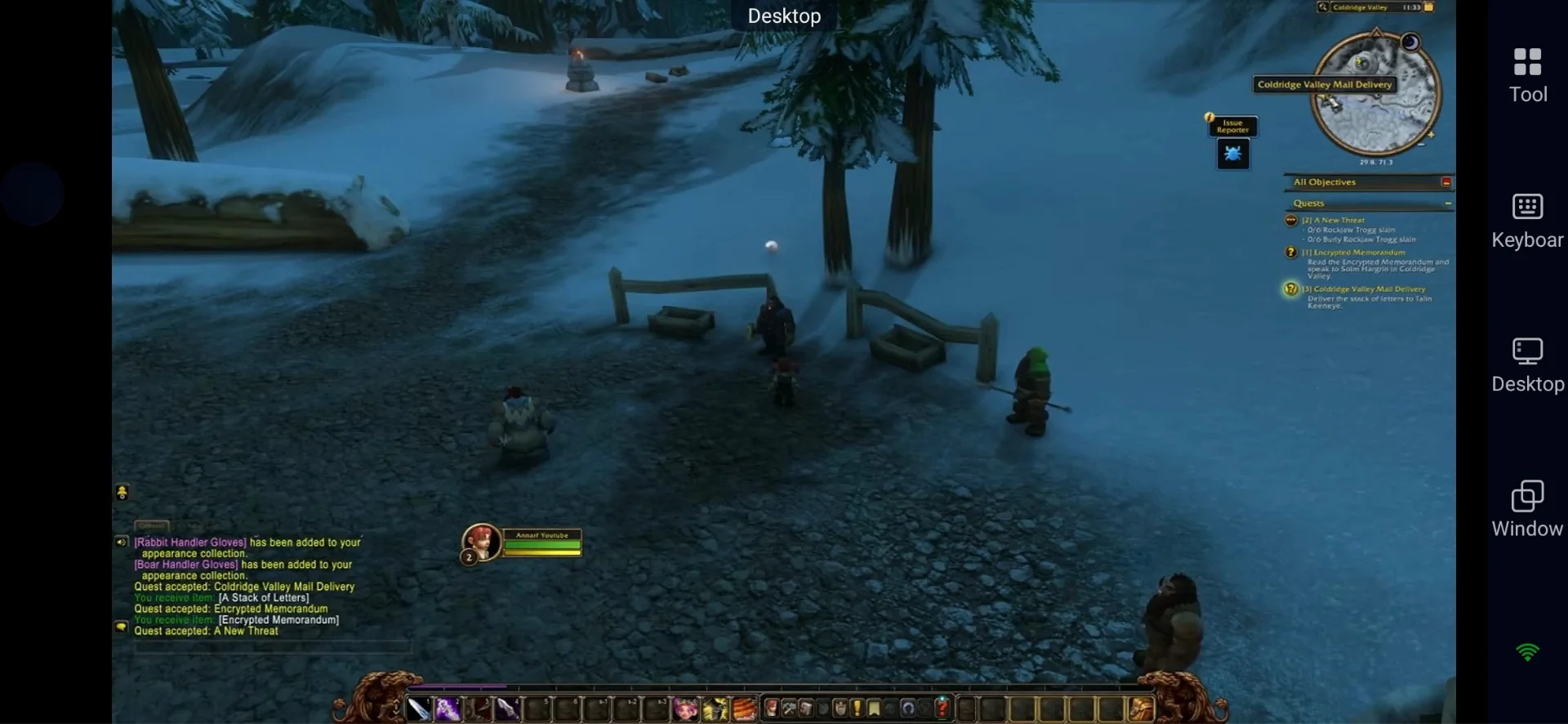
Questing is the main way to level up in World of Warcraft: Forever. You can also gain experience through dungeons and grinding enemies, but the game includes over 1,000 new quests to make leveling through different areas easier.
How to Find and Complete Quests
Quests are marked with different icons above NPCs, helping you identify which characters have tasks available. You can also use the map and quest log to track objectives and find where to go next.
-
Quest markers: Yellow exclamation marks indicate available quests, while question marks indicate quests ready to turn in. Blue markers indicate repeatable quests.
-
Quest log: Open your quest log to review objectives, rewards, and experience. Selecting a quest also adds an arrow to your minimap pointing toward its location.
-
Map and objectives: Press M to open the map and check quest locations. You can also click enemies to see whether they are linked to an active quest and track your progress.
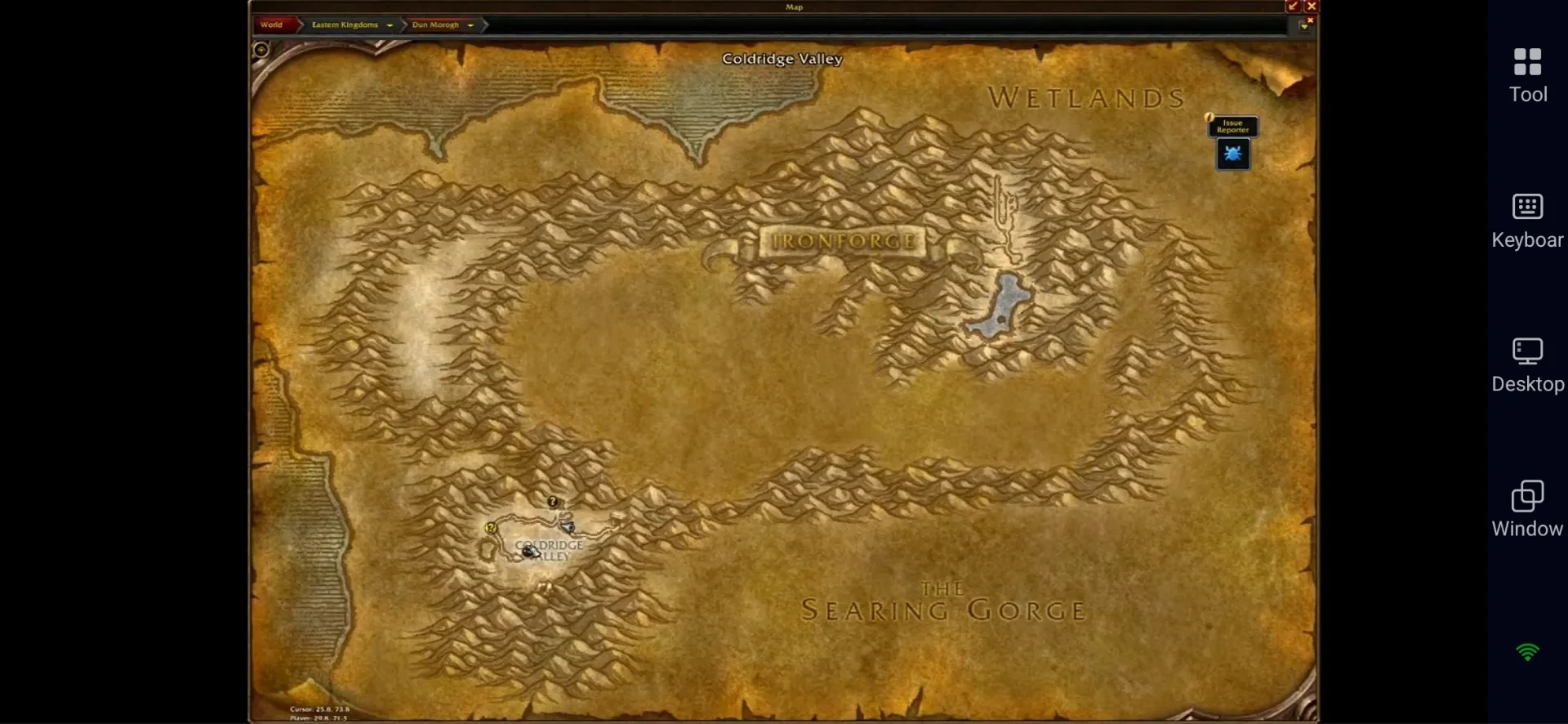
Use Questie to Find Quests and Objectives
The default map doesn't always show every available quest in a zone. Installing the Questie addon makes this easier by displaying quest locations and objectives directly on your map.
Questie can help you:
-
Find available quests and quest givers throughout each zone.
-
Locate enemies you need to defeat for quest objectives.
-
Find the areas where required quest items can be collected.
-
See quest locations and turn-in points without having to search the zone manually.
To install Questie, download the standalone CurseForge app from its official website. Add World of Warcraft to the app, select WoW Forever as your game version, then search for Questie in the addon browser and click Install. Once installed, type /reload in the game chat to load the addon.
Questie makes it easier to plan your route, complete nearby objectives together, and avoid wasting time searching for quest locations.
The Main Ways to Gain Experience
There are three main ways to level up in WoW Forever:
-
Questing: This is the primary leveling method. Most of your experience comes from completing objectives and turning quests in, rather than simply defeating enemies along the way. With over 1,000 new quests added, you can usually move between quest hubs without stopping to grind for extra experience.
-
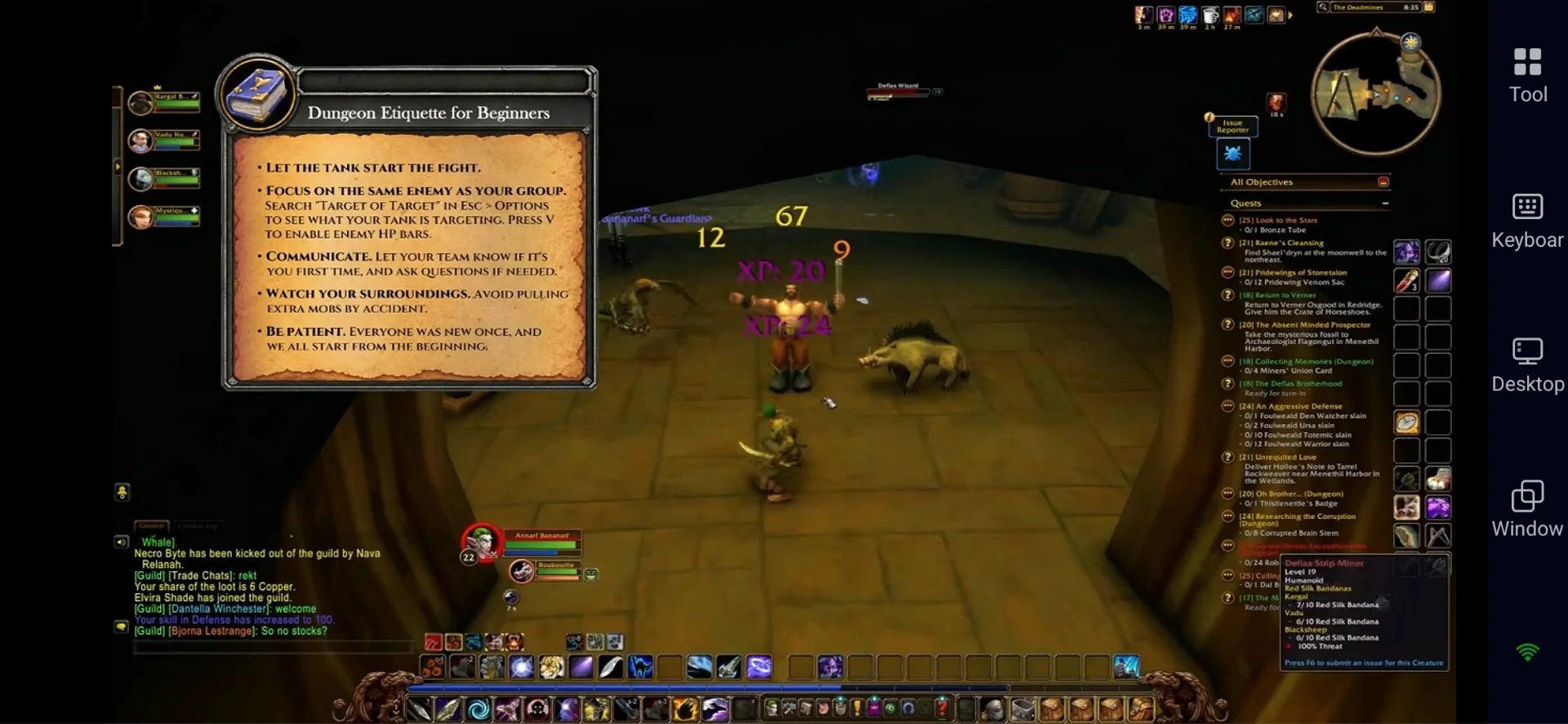
Dungeons: Dungeons offer experience, equipment, and additional quests. Much of the experience comes from completing and turning in dungeon quests, so collect the available quests before entering an instance whenever possible.
-
Grinding: This means repeatedly defeating enemies for experience. Although it remains an option, it is less necessary in WoW Forever because the expanded quest content fills many of the gaps that previously required grinding.
Beginner tip: Focus on questing as you explore new areas, and keep an eye out for dungeon quests when you're ready for group content. If you encounter an elite quest enemy that is too difficult to defeat alone, try finding other players nearby so you can tackle it together.


 Pre-set Keymaps for Easy Play


Talents, Trainers, and Abilities
Your character becomes stronger as you level up, but gaining levels alone isn't enough. You also need to learn new abilities, upgrade existing spells, and spend talent points to develop your preferred playstyle.
Visit Your Class Trainer Regularly
Class trainers are an important part of character progression in World of Warcraft: Forever. You should visit yours every two levels, starting at level 2, to check for new abilities and upgrades.
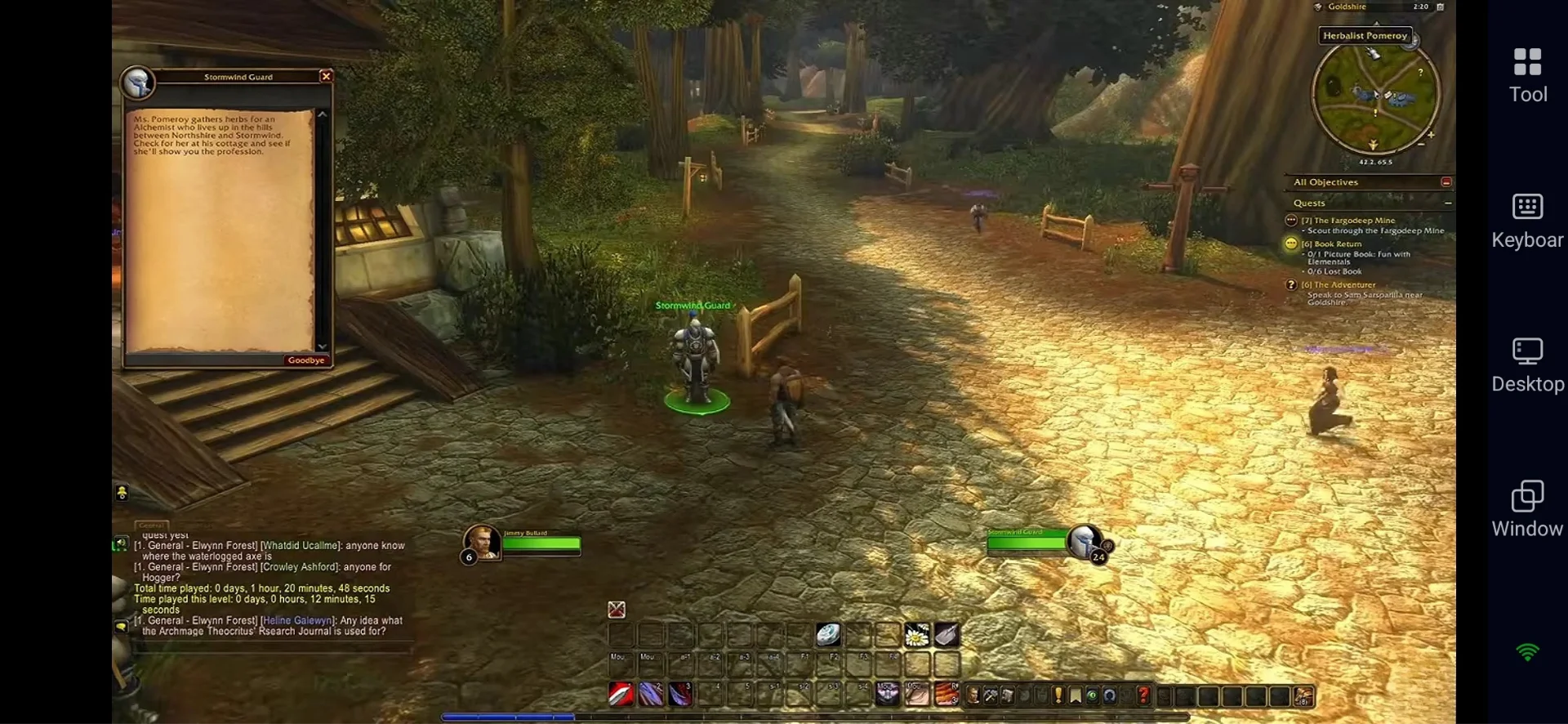
Trainers can teach you new skills or higher ranks of abilities you already know. However, these skills cost gold, and the price increases as you reach higher levels. Make sure to save some of your gold for training instead of spending everything on equipment or other items.
Beginner tip: After learning new abilities, open your spellbook and check for glowing icons. These indicate skills that aren't currently on your action bar. Drag them onto your bar so you can use them.
Also, remember to replace older ability ranks with the newer versions when you learn an upgrade. Otherwise, you might still be using a weaker version of the same skill without realizing it.
Unlock and Spend Class Talent Points
At level 10, you unlock your class talent tree. This is where you can start shaping your character around a particular role or playstyle.
Each class has three talent trees, offering different passive bonuses and abilities. Some talents unlock entirely new skills, while others improve or change how your existing abilities work.
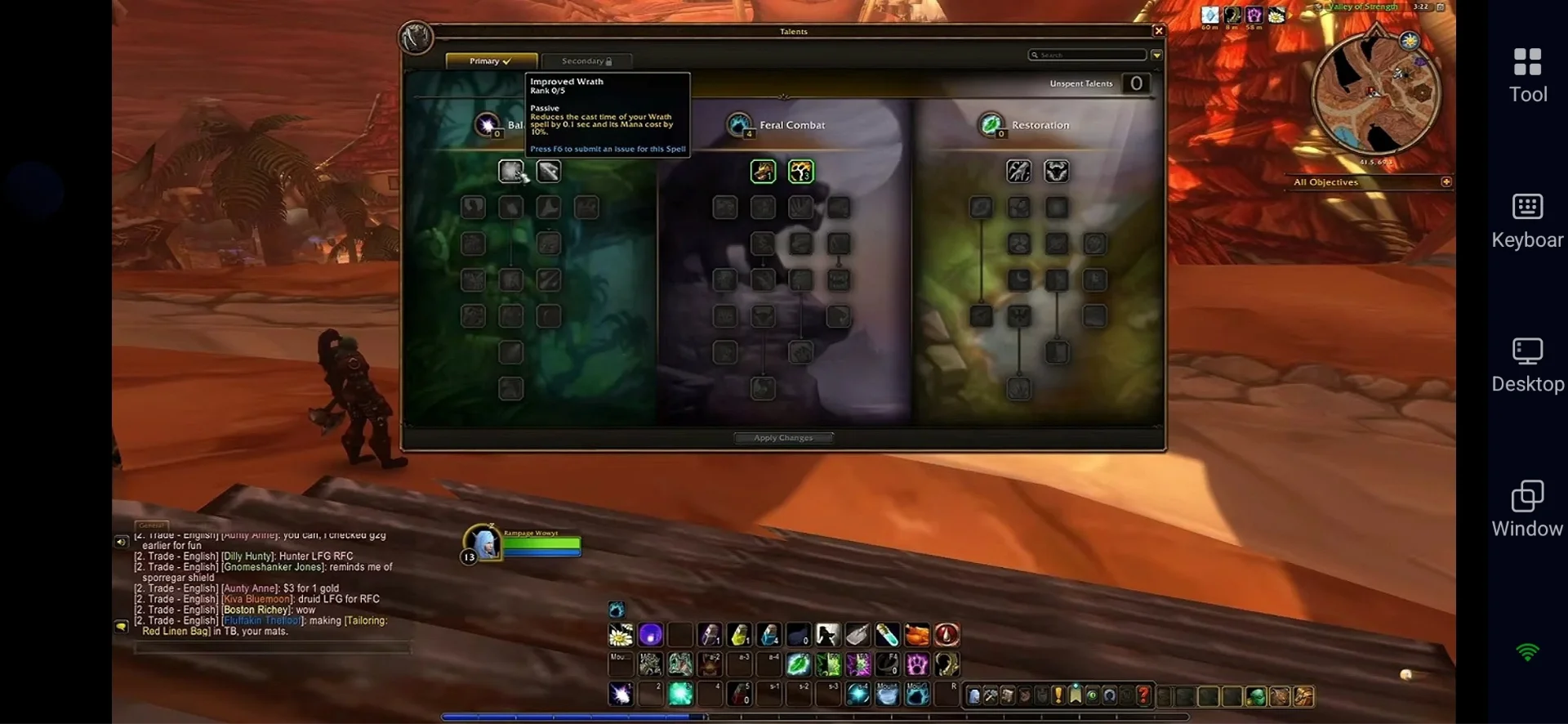
Your talent choices can also determine your combat role. For example, Paladins can specialize in:
-
Retribution: Focus on dealing damage.
-
Protection: Improve defenses and abilities for tanking enemies.
-
Holy: Develop healing abilities and support your group.
Other classes may have three talent specializations that focus on different ways of dealing damage rather than changing their combat role.
You don't necessarily need to spend every point in one tree. Some builds combine talents from multiple trees, so experiment with different options and see which abilities work best for your playstyle.
Changing your talents: If you want to try a different build, you can visit a trainer and choose to unlearn your talents. However, not every trainer offers this service, so check for one that allows talent respecialization before making the trip.
Check Your Legacy Talent Trees
World of Warcraft: Forever also introduces a separate Legacy system that rewards you for completing challenges across different characters and activities.
You earn Legacy points through achievements such as leveling different classes, improving professions, exploring, participating in PvP, and completing dungeons. You can then spend these points across three Legacy talent trees:
-
Professions: Improve profession progression and increase your chances of finding rare materials.
-
Adventure: Unlock useful character bonuses, including earlier access to class talent points.
-
Resourcefulness: Gain practical benefits such as longer food buffs and reduced equipment durability loss.
One particularly useful upgrade is Talented, which allows you to start earning class talent points at level 5 instead of level 10 when combined with the required points in Well-Rested. This gives you more talent points to spend while leveling.
The Legacy system offers plenty of options, so take some time to explore its trees and choose upgrades that support your goals.
Dungeons and Group Play
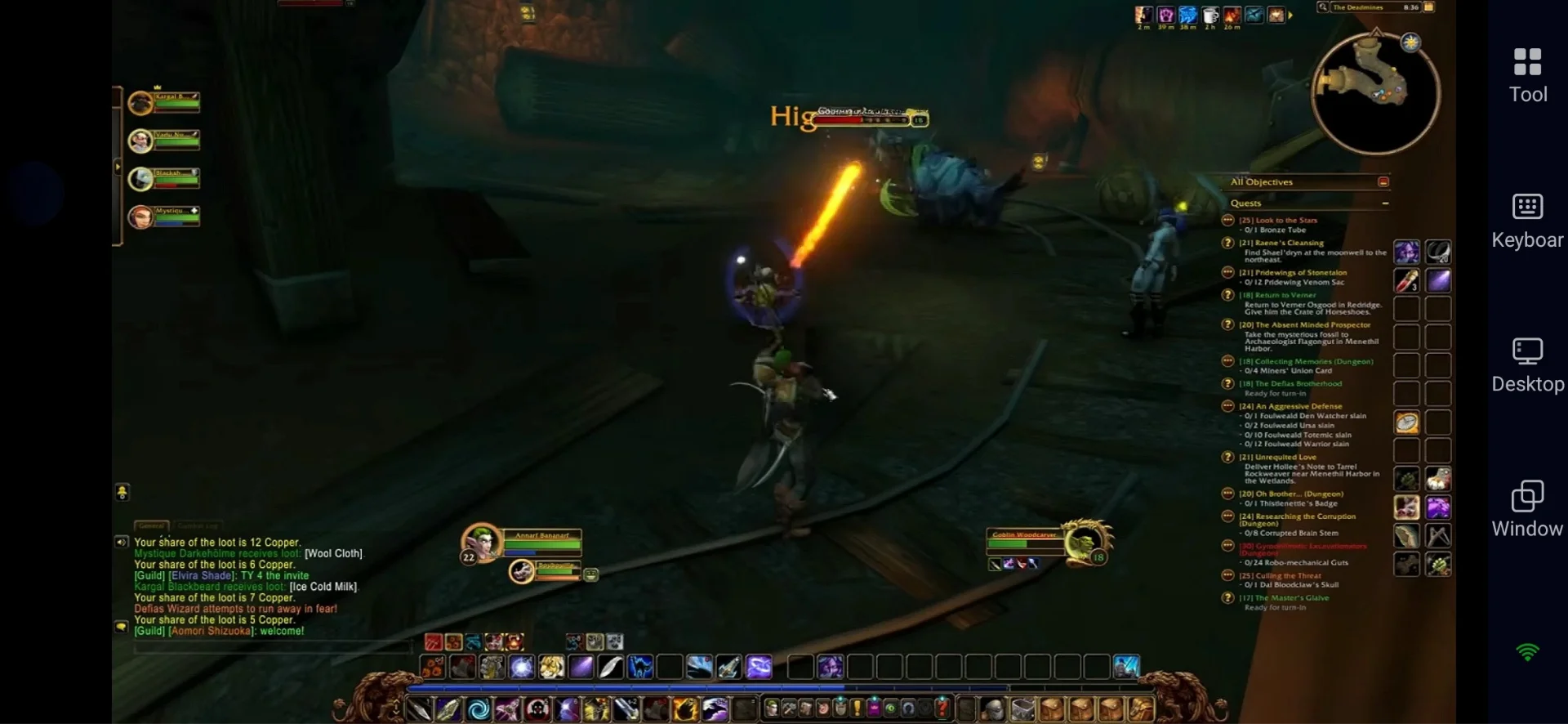
Dungeons are an important part of leveling in World of Warcraft: Forever. They offer valuable equipment, experience, and opportunities to play with other players. You'll find new dungeons every few levels, giving you plenty of group content to explore on your way to level 60.
When to Start Running Dungeons
You can start looking into dungeons at around level 15. Each dungeon has its own recommended level range, so check which ones are suitable for your character before joining a group.
If you're new to the game or unfamiliar with a particular dungeon, consider entering a few levels above its minimum recommended level. Enemies above your level are harder to hit, which can make fights more difficult.
You can also ask an innkeeper about available dungeons. Choose "Tell me about the dungeons I could explore" to see which ones are currently suitable for your character, along with information about their locations.

Pick Up Dungeon Quests Before Entering
One of the most important things to remember is to collect dungeon quests before joining a group. These quests often provide some of the best experience rewards in the game, and completing several of them during one run can give you a significant amount of XP.
Most dungeons have around three to five related quests, which you can collect from different NPCs. Some quest givers are near the dungeon, while others may be located in different parts of the world.
Take a moment to find and accept these quests before entering. You can then complete several objectives during the same run and collect their rewards when you finish.
How to Find a Dungeon Group
World of Warcraft: Forever has an in-game group finder that makes it easier to find players for dungeons.
Press I to open the group finder. From there, you can:
-
Create a listing: Choose the dungeon, select your role, and describe the type of group you're looking for.
-
Join an existing group: Open the group browser to find parties that are currently recruiting.
-
List yourself: Register your character as available for a particular dungeon so group leaders can find and invite you.
If you're new to dungeons, you can select a Learning playstyle when creating your listing. This helps other players understand that you're still learning the content and would prefer a more relaxed run.
Beginner Tips for Dungeon Runs
Keep these tips in mind to make your first dungeon runs easier:
-
Group up for difficult quests: Elite enemies can be difficult to defeat alone, especially when they're your level or higher. Invite nearby players or join someone else's group.
-
Build a balanced party: A typical dungeon group needs players who can tank, heal, and deal damage. These roles work together to keep the party alive and defeat enemies.
-
Consider equipment competition: When forming a group, having a mix of armor and weapon types can reduce competition for certain loot drops.
-
Don't rush into unfamiliar dungeons: If you're new, choose a relaxed or learning group and take time to understand the encounters.
-
Check for new dungeons as you level: WoW Forever includes nine additional dungeons, so keep an eye out for new ones as your character progresses.
Dungeons are worth doing for both their equipment and experience rewards. Even if you're mainly focused on questing, make room for dungeon runs whenever your character reaches an appropriate level.
Gold and the Auction House
Gold is important in World of Warcraft: Forever, especially when you start saving for expensive purchases such as mounts and upgrades. The Auction House is one of the easiest ways to earn extra gold, as many items you collect while questing and exploring can be worth more to other players than they are to NPC vendors.
Making Gold with the Auction House
Before selling an item, check whether it is worth more on the Auction House than it is to an NPC vendor. Gray-quality junk and items marked with a gold coin can usually be sold directly to vendors using the Sell Junk option. For other items, open the Auction House, select the Sell tab, and right-click an item to check its current listing price.
If the item is worth more than its vendor price, you can list it for sale. The Auction House will suggest a price based on the cheapest available listing, so you don't have to compare every auction manually.
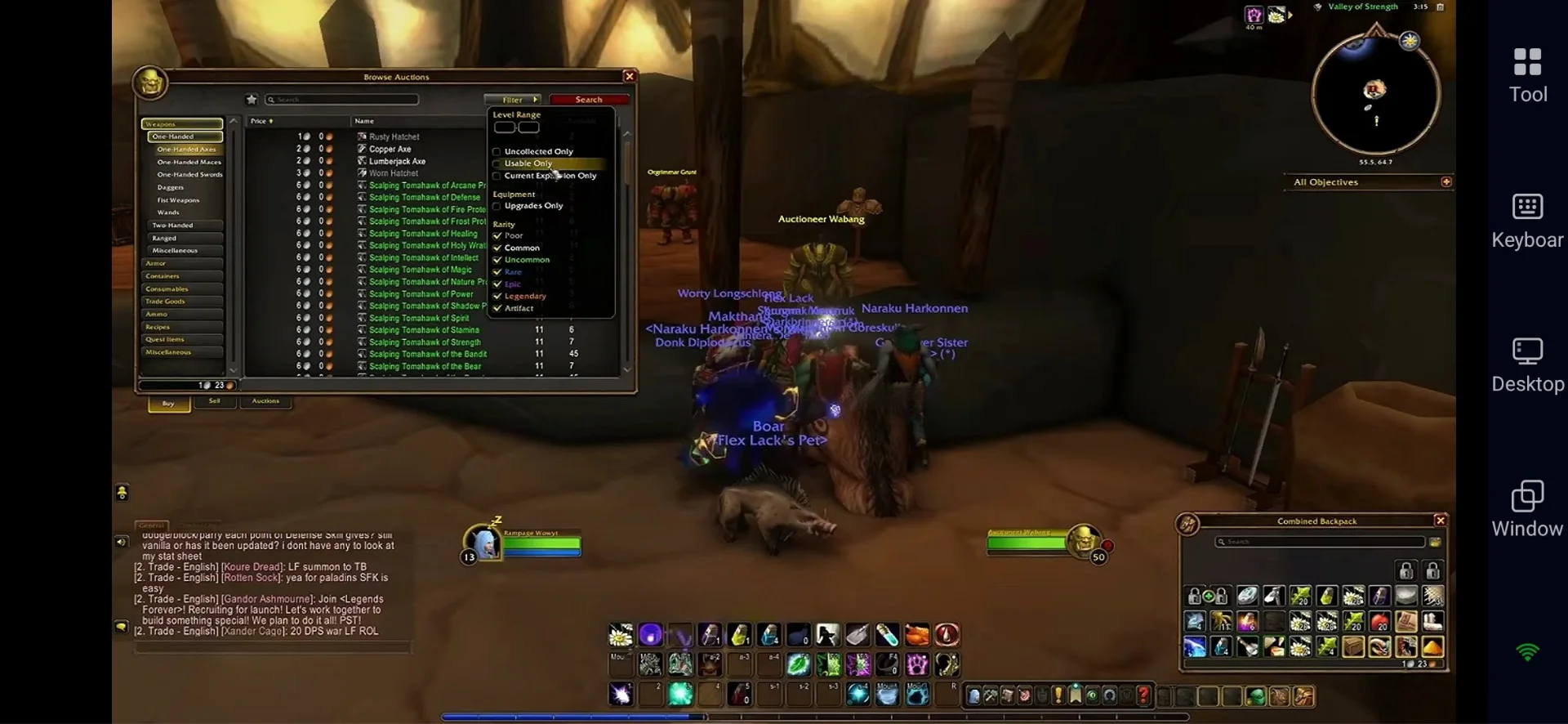
Keep in mind that not every item can be traded. Soulbound items cannot be listed on the Auction House, while Bind on Equip items can be sold as long as you haven't equipped them. Items marked Bind on Pickup become bound to you as soon as you collect them.
Use Auctionator to Check Item Prices
The built-in Auction House works well for basic buying and selling, but the Auctionator addon makes it easier to decide what to keep, sell, or vendor. After installing it, open the Auction House and use the Full Scan option to check current listings.
Once the scan is complete, Auctionator displays both the vendor value and estimated Auction House price when you hover over items in your inventory. This helps you avoid selling something to a vendor when another player is willing to pay more for it.
Auctionator also makes listing items easier by suggesting a competitive price based on current auctions. You can install it through CurseForge by selecting World of Warcraft: Forever, searching for Auctionator, and installing the correct version.
Buy Bags and Manage Your Inventory
One of your first useful purchases should be a set of larger bags. More inventory space means fewer interruptions while questing and collecting loot. You can find bags under the Containers category at the Auction House and sort them by slot capacity. If you're short on gold, start with inexpensive eight-slot bags and upgrade them when you can afford something better.
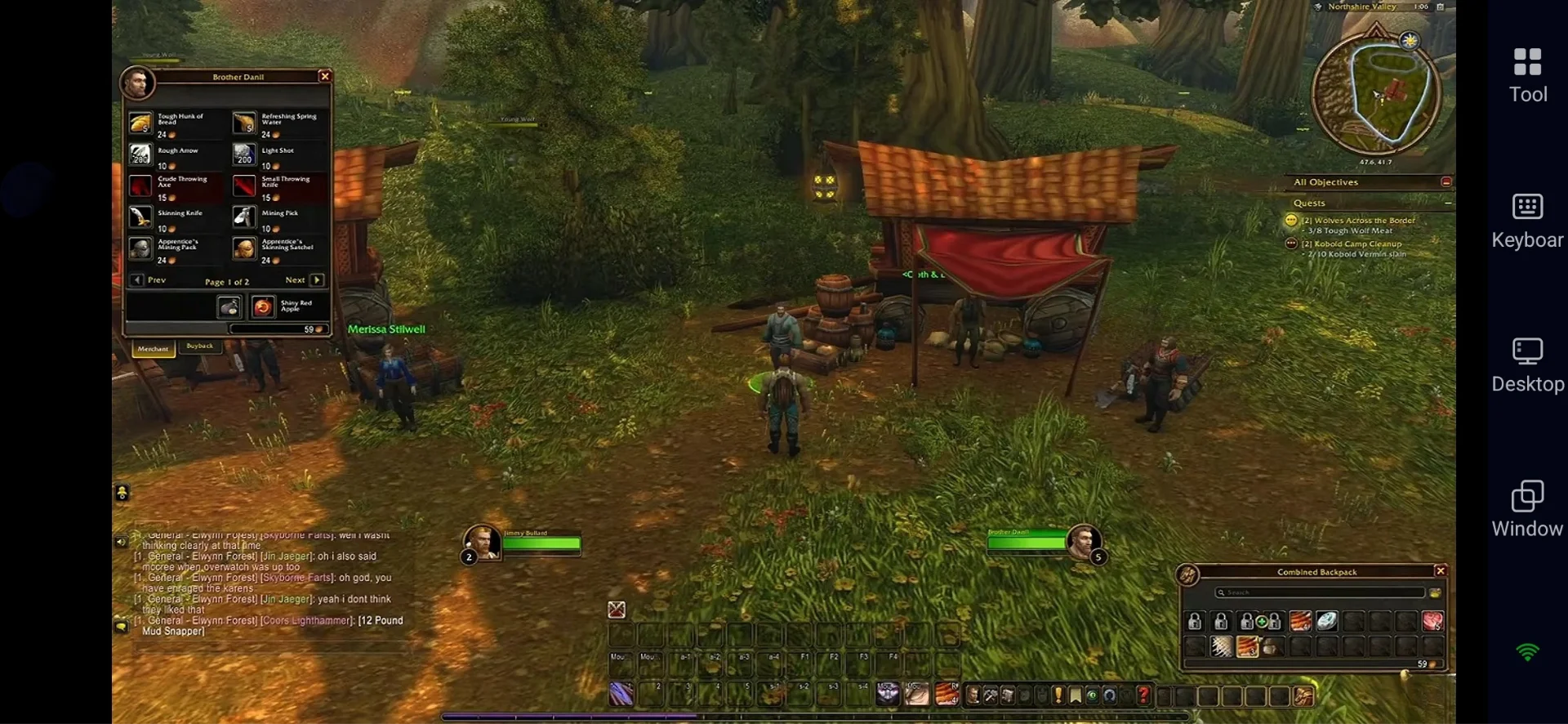
You can also use alternate characters to manage items you want to sell. Each character has its own inventory and bank space, so sending tradeable items to an alternate character can free up room on your main character. Some players use a dedicated Auction House character to list items and send the gold back to their main character once those items sell.
Try to avoid spending all your early gold on extra bank space or unnecessary purchases. Saving for your first mount and its later upgrade will give you a more useful goal to work toward.
Professions and Crafting in WOW Forever
Professions are useful for more than making gold. They allow you to gather materials, craft equipment, create consumables, and improve your character's overall performance. You can also sell crafted items and materials through the Auction House to earn extra gold.
Primary and Secondary Professions
Professions are divided into two categories:
-
Primary Professions: You can learn up to two primary professions. These include six crafting professions and three gathering professions.
-
Secondary Professions: You can learn all three secondary professions without using your primary profession slots.
|
Category |
Professions |
|
Crafting |
Tailoring, Leatherworking, Blacksmithing, Enchanting, Engineering, Alchemy |
|
Gathering |
Skinning, Mining, Herbalism |
|
Secondary |
First Aid, Cooking, Fishing |
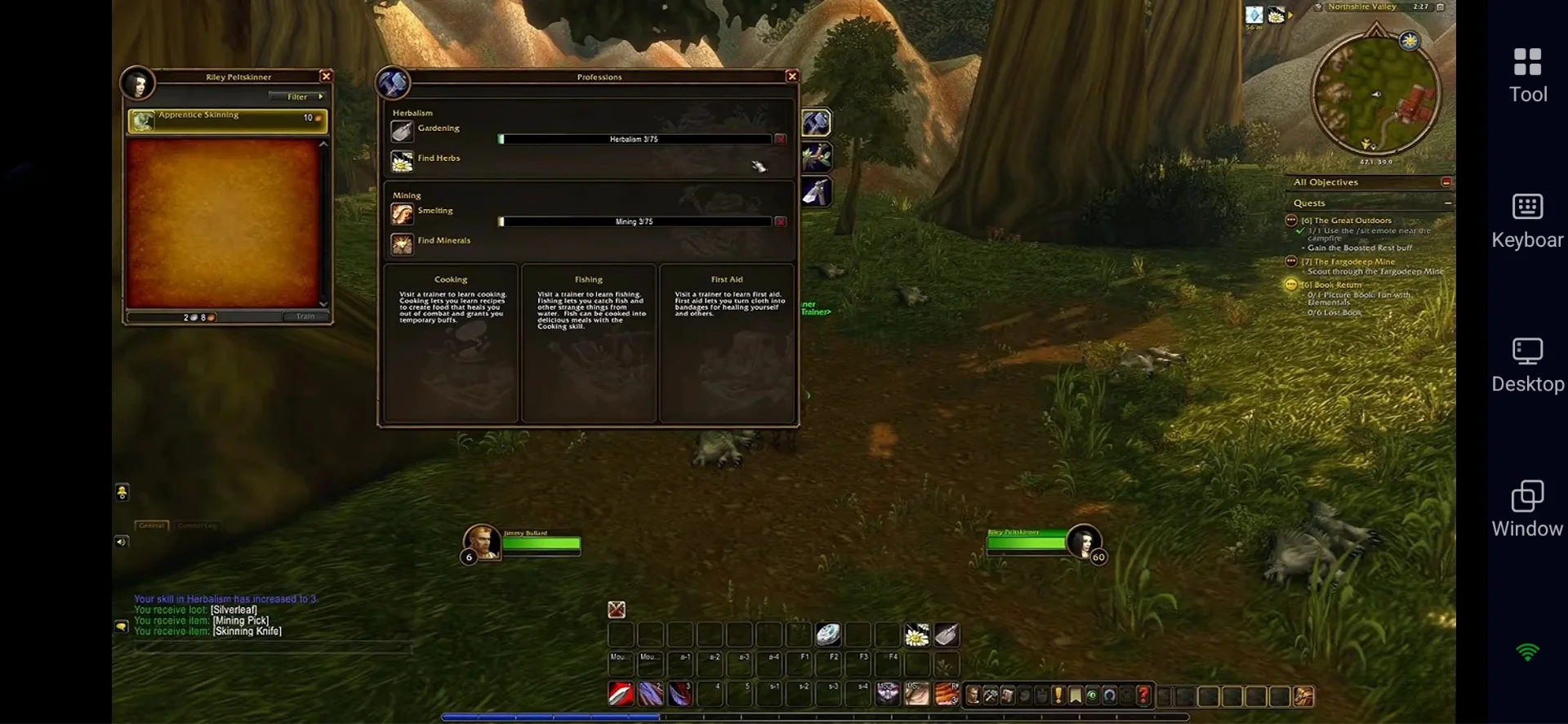
One of your early starter-zone quests lets you choose a gathering profession: Mining, Skinning, or Herbalism. It's a good idea to pick one early so you can start collecting materials while leveling.
How to Learn and Level Professions
Visit a profession trainer to learn the first rank of a profession. Simply seeing a mining node or an herb in the world isn't enough; you must learn the corresponding profession before you can gather it.
Each profession has four training ranks:
-
Apprentice
-
Journeyman
-
Expert
-
Artisan
As you gather materials or craft items, your profession skill increases. The color of a recipe or gathering target indicates how likely it is to grant a skill point. Check your character's Skills menu to see your current profession levels and when you can train for the next rank.
Some gathering professions also require tools. Mining requires a pickaxe, while Skinning requires a skinning knife. Keep these items in your inventory so you can gather materials whenever you find them.
Choosing Your Primary Professions
Your two primary profession slots are best used for professions that complement each other or support your preferred playstyle.

|
Profession |
What It Does |
Common Pairing |
|
Tailoring |
Crafts cloth armor and bags. |
Skinning or Enchanting |
|
Leatherworking |
Crafts leather and mail armor, ammunition, and arrow bags. |
Skinning |
|
Blacksmithing |
Crafts weapons and mail or plate armor. |
Mining |
|
Enchanting |
Adds stats and effects to equipment by using materials from disenchanted items. |
Tailoring or a gathering profession |
|
Engineering |
Creates guns, ammunition, equipment, and offensive items such as bombs. |
Mining |
|
Alchemy |
Creates potions for buffs, health, and mana, and can transmute crafting materials. |
Herbalism |
|
Skinning |
Collects leather and hides from defeated beasts. |
Leatherworking |
|
Mining |
Collects ore used in crafting. |
Blacksmithing or Engineering |
|
Herbalism |
Collects herbs used in crafting potions. |
Alchemy |
You don't have to choose professions based on your class, but some combinations are more convenient. For example, Skinning provides materials for Leatherworking, while Mining supplies resources for Blacksmithing and Engineering. Herbalism is particularly useful for Alchemy.
Some crafting professions can also be expensive to level because they require large amounts of materials. Gathering your own resources can reduce those costs, while selling extra materials can help fund your crafting.
Don't Ignore Secondary Professions
You can learn all three secondary professions, so there is little reason to leave these slots unused.
-
First Aid: Crafts bandages that restore health over time. Unlike food, bandages can be used during combat, making them useful for classes with limited healing options.
-
Cooking: Creates food and drinks that restore health and mana outside combat. Higher-level recipes can also provide temporary stat bonuses. You need to cook near a fire.
-
Fishing: Lets you catch fish used in Cooking and Alchemy. You can also find other items, such as bloatsam and wreckage, which may provide additional value.
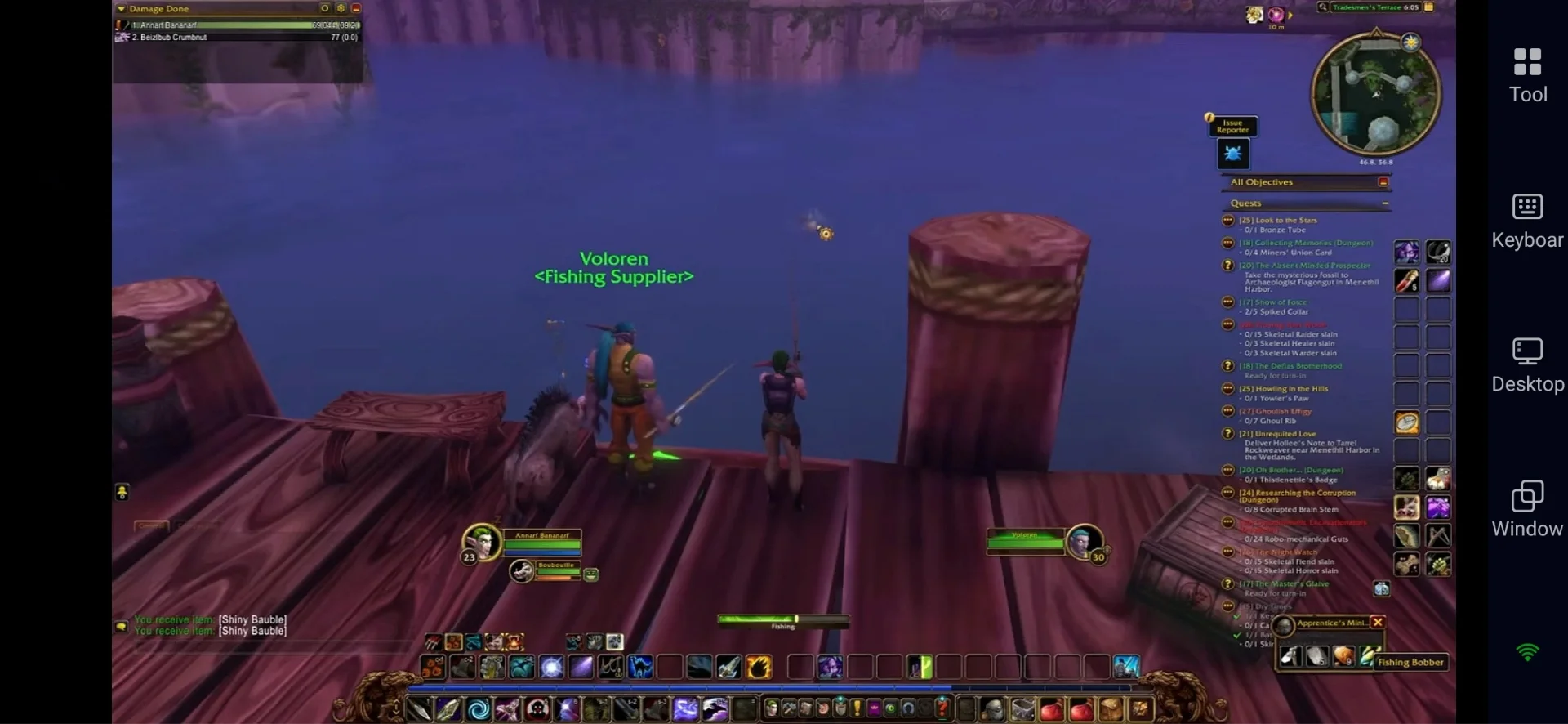
These professions are useful throughout the leveling process, especially First Aid and Cooking. Learning them early gives you more opportunities to collect materials and improve your profession skills as you explore.
Keep Your Professions Leveling Alongside Your Character
Don't wait until you reach higher-level zones to start working on your professions. Gathering skills need to keep pace with your progress, or you may encounter herbs and mining nodes that are too difficult for your current skill level.
If you change your mind about a primary profession, you can abandon it and learn another one. However, you will lose all progress in the abandoned profession, and learning it again means starting from the beginning. Choose carefully if you've already invested a lot of time in leveling it.
Conclusion
That's everything you need to get started in World of Warcraft: Forever! With the right faction and class, better gear, a first mount, and a basic understanding of Azeroth, you're ready to begin your adventure. Keep these beginner tips in mind as you level up, complete quests, and unlock new abilities. Most importantly, choose a character you enjoy and explore the world at your own pace. Want to continue your adventure even when you're away from your PC? Use OSLink to remotely play World of Warcraft: Forever on your phone, so you can keep questing and managing your character wherever you go.
 Download