English
Tales of Eternia Remastered brings a classic JRPG back with real-time combat, a party of unique characters, and an adventure spanning the two worlds of Inferia and Celestia. But winning battles takes more than button-mashing. You need to understand how Artes work, build a balanced party, manage HP and TP, and make good use of cooking and the remaster's new gameplay options. This Tales of Eternia Remastered beginner guide covers the essential tips and strategies to help you get the most out of your journey, from your first battles to the tougher encounters ahead.
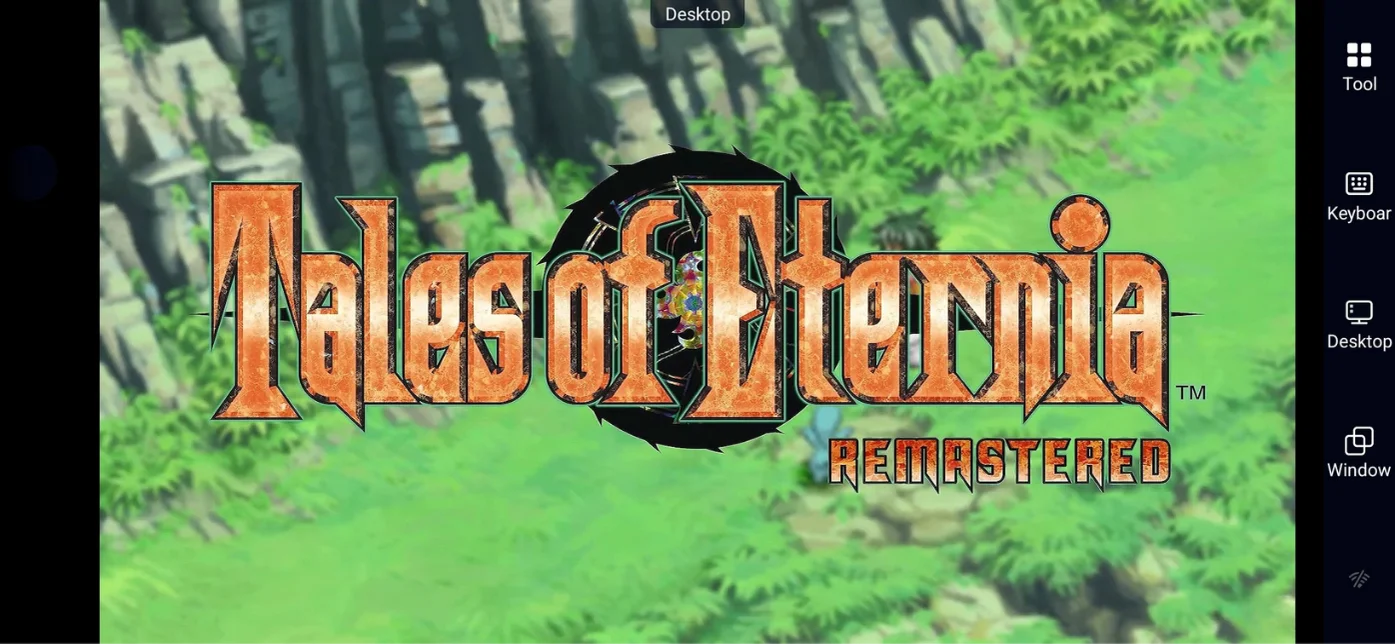
You can also take your adventure beyond your desk with OSLink. By remotely accessing your PC from a compatible mobile device, you can play the PC version of Tales of Eternia Remastered while away from your usual gaming setup.
What’s New in Tales of Eternia Remastered
Tales of Eternia Remastered brings the classic JRPG to modern platforms with updated presentation and useful quality-of-life features. However, it is a remaster rather than a complete remake, so the original story, characters, and core gameplay experience remain at the heart of the adventure.
The remastered edition makes the journey across Inferia and Celestia more convenient with optional navigation aids, customizable gameplay settings, and faster battles. It also lets players switch between the remastered presentation and the original graphics and sound effects.
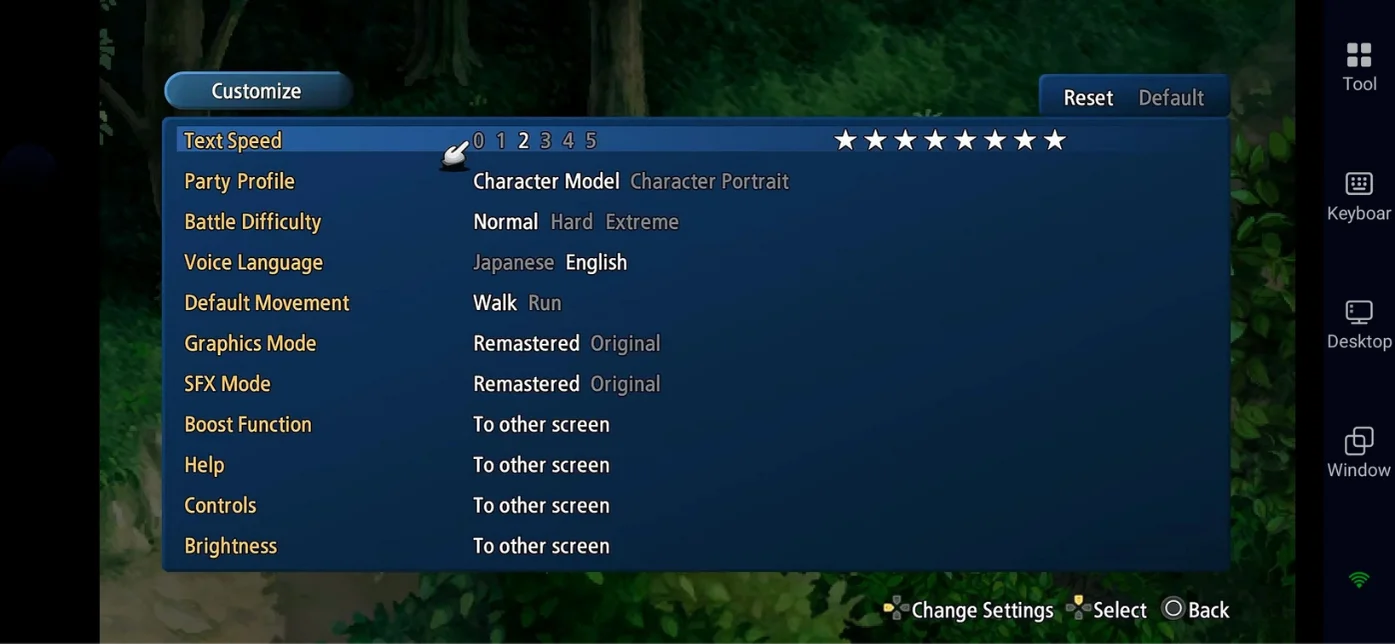
Here are the key features that distinguish Tales of Eternia Remastered from the original experience:
|
Feature |
What It Does |
|
Destination Markers |
Highlights story objectives and other points of interest to make navigation easier. |
|
Encounter Toggle |
Lets you adjust random encounters when you want to explore or focus on battles. |
|
Boost Settings |
Allows you to adjust gameplay, including EXP and Gald acquisition up to 4× and damage up to 5×. |
|
Battle Retry |
Lets you retry a battle after losing without having to reload your save manually. |
|
High-Speed Auto Battle |
Speeds up battles while using Auto mode, helping you get through routine encounters faster. |
|
Original Graphics and Sound Effects |
Lets you switch between the remastered presentation and the original graphics and sound effects. |
These additions give players more control over how they experience the game without replacing its classic JRPG foundations. In the next section, we'll look at which remaster features are most useful for beginners and when to use them.
Best Remaster Settings to Use as a Beginner
Before diving deeper into Tales of Eternia Remastered, take a moment to adjust the settings to suit your playstyle. These options can make exploration more convenient, reduce repetitive battles, and help you prepare for tougher encounters without taking away the challenge unless you want them to.
Adjust the Boost Settings
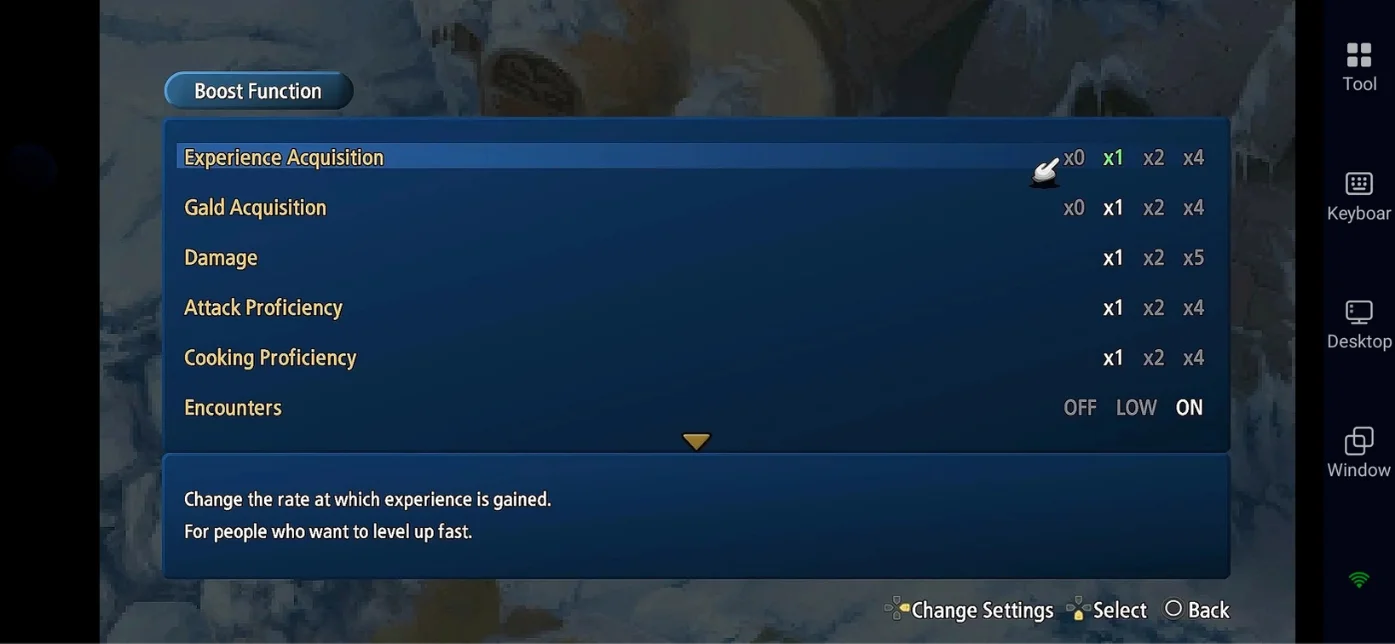
Open Menu > Custom > Boost Function to adjust options such as Experience Acquisition, Gald Acquisition, Damage, Attack Proficiency, Cooking Proficiency, and encounter frequency. If you're struggling with difficult fights or want to spend less time grinding, these settings can help. However, beginners who want to experience the game's original progression should leave most boosts unchanged until they feel they need them.
Keep Useful Destination Markers Enabled
Destination markers can make it easier to navigate the story and discover optional content. Keep them enabled if you're unfamiliar with the game's world, especially the markers for valuable items, events that teach new Artes, and time-sensitive events. The hourglass markers are particularly worth checking promptly, as some events have limited availability.
Adjust Random Encounters to Suit Your Progress
Random battles are useful for gaining EXP and developing your characters, but they can slow down exploration when you're revisiting familiar areas. Disable encounters temporarily when you want to focus on the story or search an area, then turn them back on when you need more experience or want to practise combat. Avoid skipping every encounter, as doing so may leave your party underprepared for tougher fights.
Use Battle Retry and Quick Recovery
Battle Retry lets you attempt a lost battle again without manually reloading your save, making it easier to learn enemy patterns and adjust your strategy. Quick Recovery provides a convenient way to restore your party from the menu between encounters. Use these options to spend less time recovering from setbacks and more time progressing through the adventure.
Speed Up Routine Gameplay
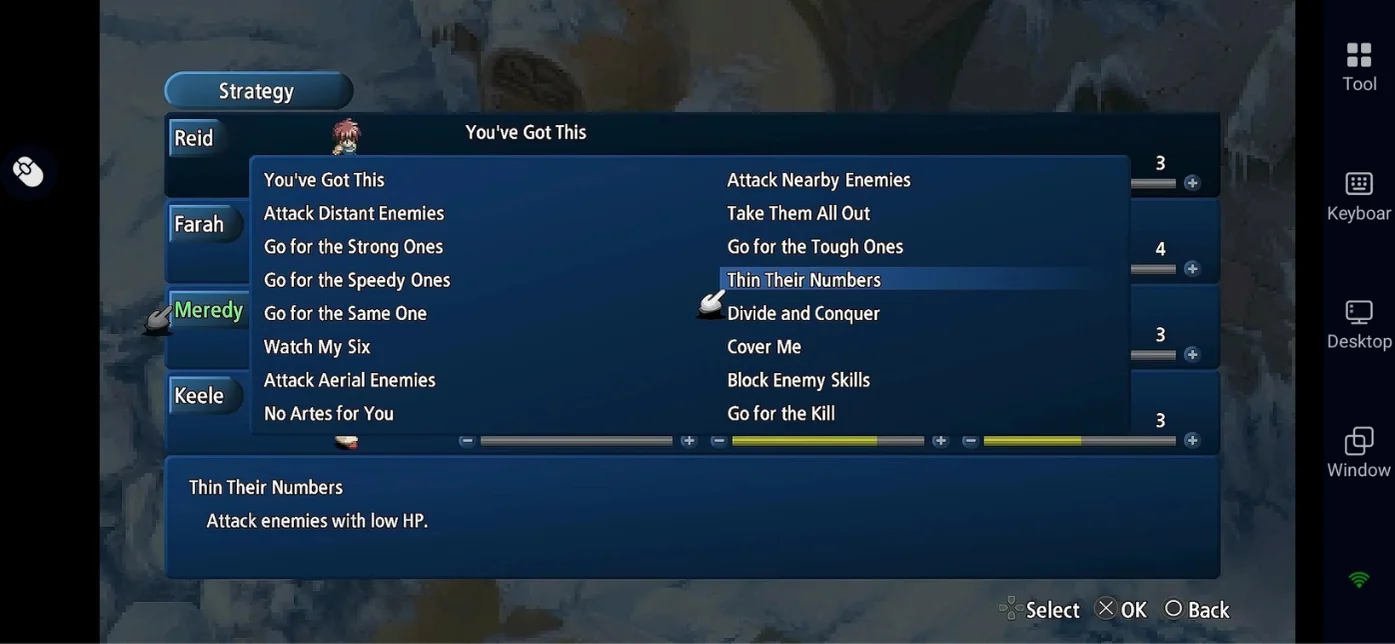
Use Run Mode to move around the field faster, particularly when travelling through familiar areas. During easier encounters, high-speed Auto mode can help battles finish more quickly. However, don't rely on it blindly against powerful enemies or bosses. Switch to manual control when you need to manage your attacks, react to enemy behaviour, or coordinate your strategy more carefully.
Choose Your Preferred Presentation
Try both the remastered and original graphics and sound options to see which presentation you prefer. The updated visuals may appeal to newcomers, while players who prefer the original pixel-art appearance may enjoy the classic mode more. You can switch between the available modes to find what feels best for you.
Select a Difficulty That Matches Your Experience
Choose a difficulty that suits your preferred level of challenge. Extreme is available from the beginning for players who want tougher battles, while Mania is also available early in the remaster. The newly added Unknown difficulty unlocks after completing the game for a subsequent playthrough. If you're new to classic action JRPGs, focus on learning the combat system before increasing the difficulty.
Make Use of the Other Convenience Options
Take advantage of autosave, customizable controls, and the available English and Japanese voice options. Autosave provides an additional layer of protection for your progress, while adjusting the controls can make battles more comfortable. You can also try both voice options to find the presentation you enjoy most.
Beginner tip: You don't need to enable every convenience feature at once. Start with the settings that make exploration and combat more comfortable, then adjust the boosts and encounter frequency as you learn the game.
Learn the Basic Combat Mechanics
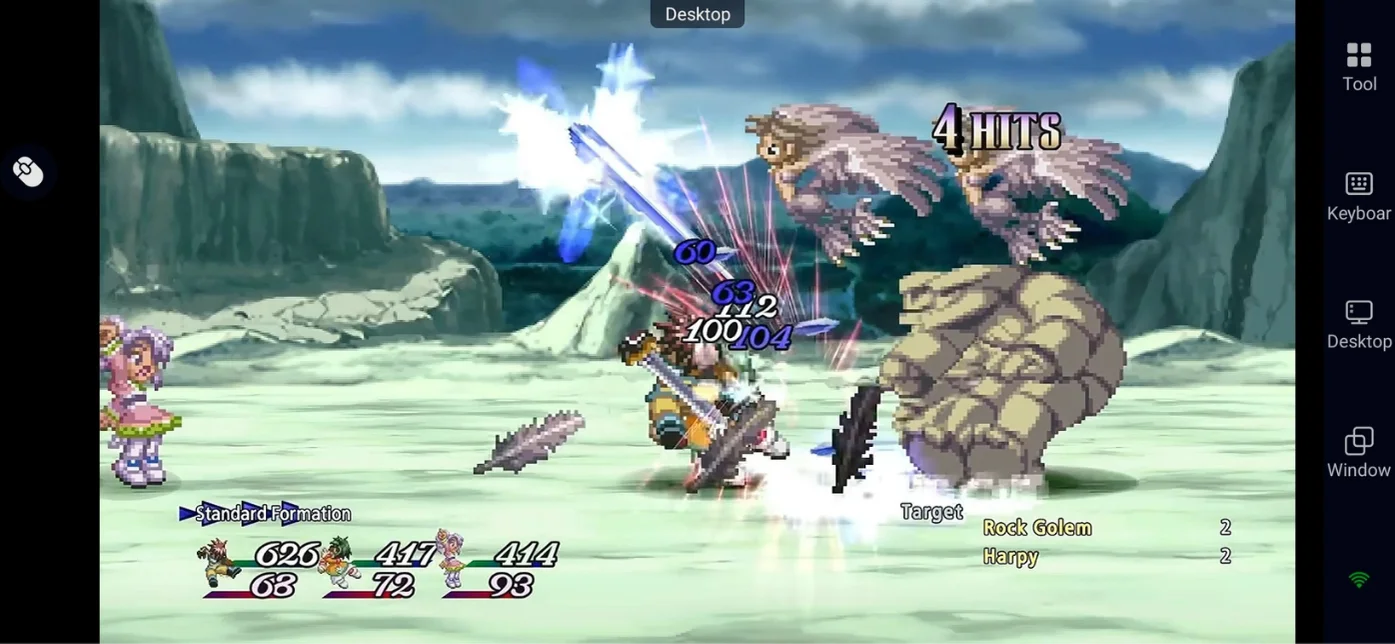
Tales of Eternia Remastered uses the Aggressive Linear Motion Battle System (A-LMBS), a real-time combat system that places your party on a 2D battlefield. You directly control one character while your other party members fight under AI control. Learning how to move, time your attacks, use Artes, and respond to enemy movements will help you handle battles more effectively.
Combat may feel a little limited when you first begin, but you'll unlock more abilities as you progress. Practising the basics early will make it easier to build combos and respond to tougher enemies later in the adventure.
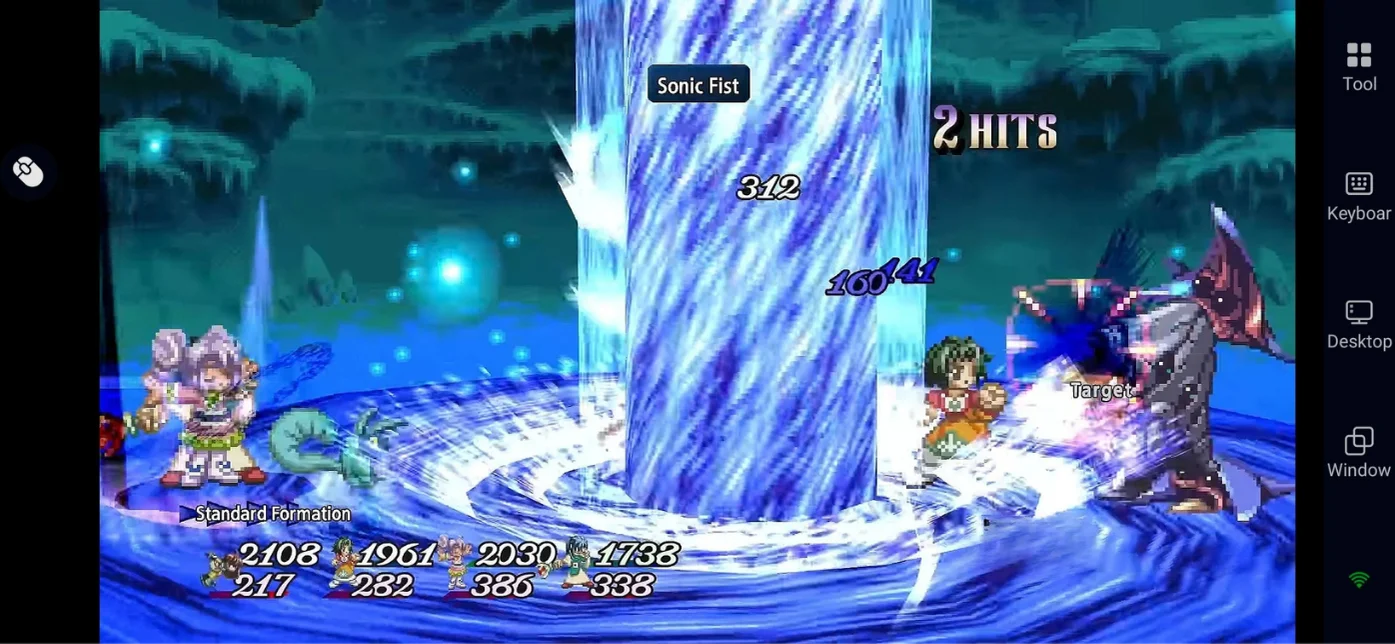
- Learn Your Basic Attacks: Start by getting comfortable with your character's movement, attack range, and timing. Practise approaching enemies, landing hits, and retreating when necessary rather than repeatedly attacking without considering their movements.
-
Combine Basic Attacks with Artes: Artes give your characters additional ways to attack and deal with different situations. Experiment with chaining basic attacks into suitable Artes to maintain pressure on enemies. As you unlock more abilities, try different combinations to find what works best for your playstyle.
-
Learn When to Guard and Reposition: Attacking constantly can leave you vulnerable to enemy retaliation. Pay attention to enemy movements, guard when necessary, and reposition yourself if an opponent's attacks become difficult to avoid. Recognizing when to attack and when to defend is especially important against stronger enemies.
-
Practise Against Different Enemies: Battles against weaker enemies provide a good opportunity to learn attack timing, movement, and Arte combinations. Use these fights to become familiar with your character's abilities before facing enemies that punish mistakes more severely.
Beginner tip: Don't worry about mastering every combat mechanic immediately. Focus on movement, basic attacks, guarding, and a few useful Artes first. As you gain experience and unlock more abilities, you can gradually experiment with longer combos and more advanced tactics.


 Pre-set Keymaps for Easy Play

Understand the Characters and Build a Balanced Party
In Tales of Eternia Remastered, choosing the right party members can make battles easier to manage. You can take four characters into battle, with each offering different strengths, from close-range attacks to powerful magic. Understanding their roles helps you decide who to bring into difficult encounters and how to balance damage with support.
Here are the main party members and what beginners should know about their combat styles:
|
Character |
Combat Role |
Main Strengths |
|
Reid Hershel
|
Melee fighter |
Uses swords and other weapons to deal physical damage and perform Arte combos. A reliable choice for players who want to fight on the front line. |
|
Farah Oersted
|
Martial artist |
Uses fast, close-range punches and kicks to pressure enemies and deliver physical attacks. |
|
Keele Zeibel
|
Offensive spellcaster |
Specializes in elemental magic, allowing him to deal powerful damage from a distance. |
|
Meredy
|
Spellcaster and support |
Uses magic and has access to healing spells, giving her flexibility in both offensive and supportive roles. |
|
Chat
|
Unconventional fighter |
Wields a hammer and uses a distinctive set of abilities. Her playstyle differs from the main party's more conventional fighters. |
|
Max
|
Ranged attacker |
Uses a powerful gun to attack enemies from a distance, offering an alternative to close-range physical combat. |






How to Choose Your Party
For your first playthrough, the main four characters—Reid, Farah, Keele, and Meredy—provide a balanced starting point. Reid and Farah handle close-range combat, while Keele focuses on offensive magic and Meredy offers additional magical support.
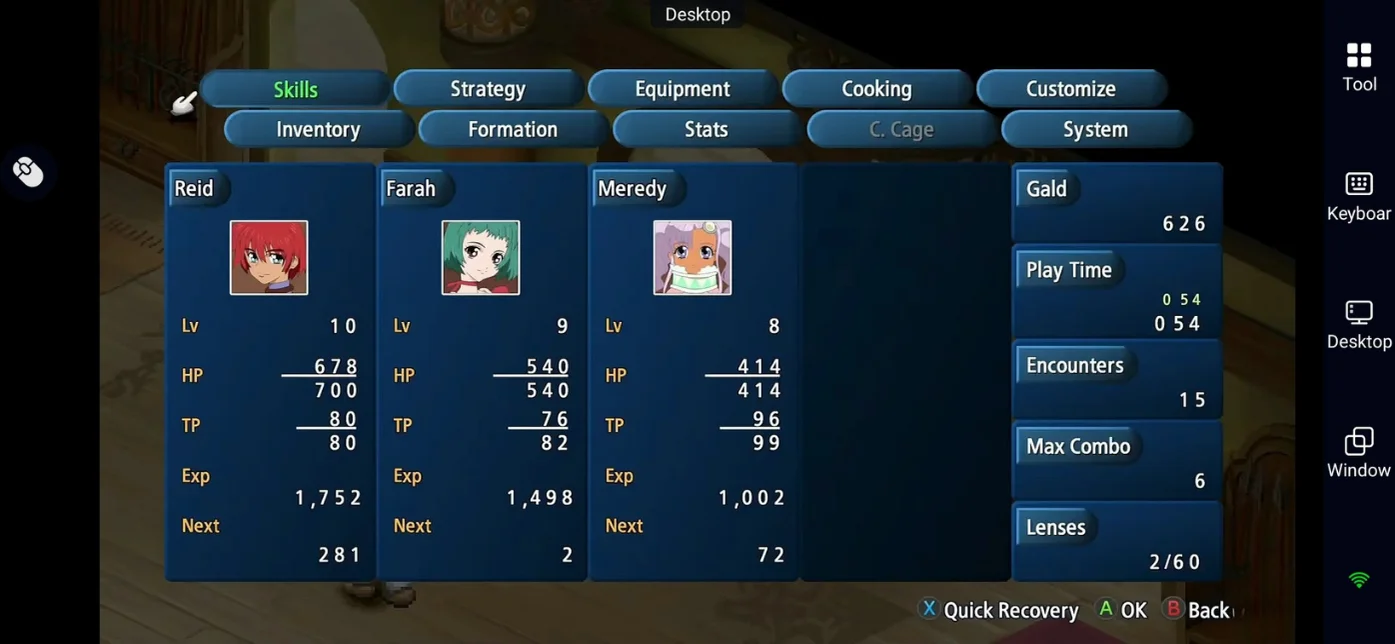
As you unlock optional party members, experiment with different combinations to see which playstyles suit you best. Replacing a melee fighter with a ranged attacker, for example, changes how your party deals damage and handles enemies that are difficult to approach.
You don't need to build the perfect team immediately. Start with a combination you're comfortable using, then adjust your lineup when a difficult encounter exposes a weakness in your current approach.
Manage HP, TP, and Healing Items
Managing HP and TP is essential for surviving longer dungeons and challenging boss fights in Tales of Eternia Remastered. HP determines how much damage a character can take before being knocked out, while TP is consumed by many Artes and spells. If you enter a difficult encounter with depleted resources, even a well-balanced party can struggle.
Learn and Use Cooking Recipes
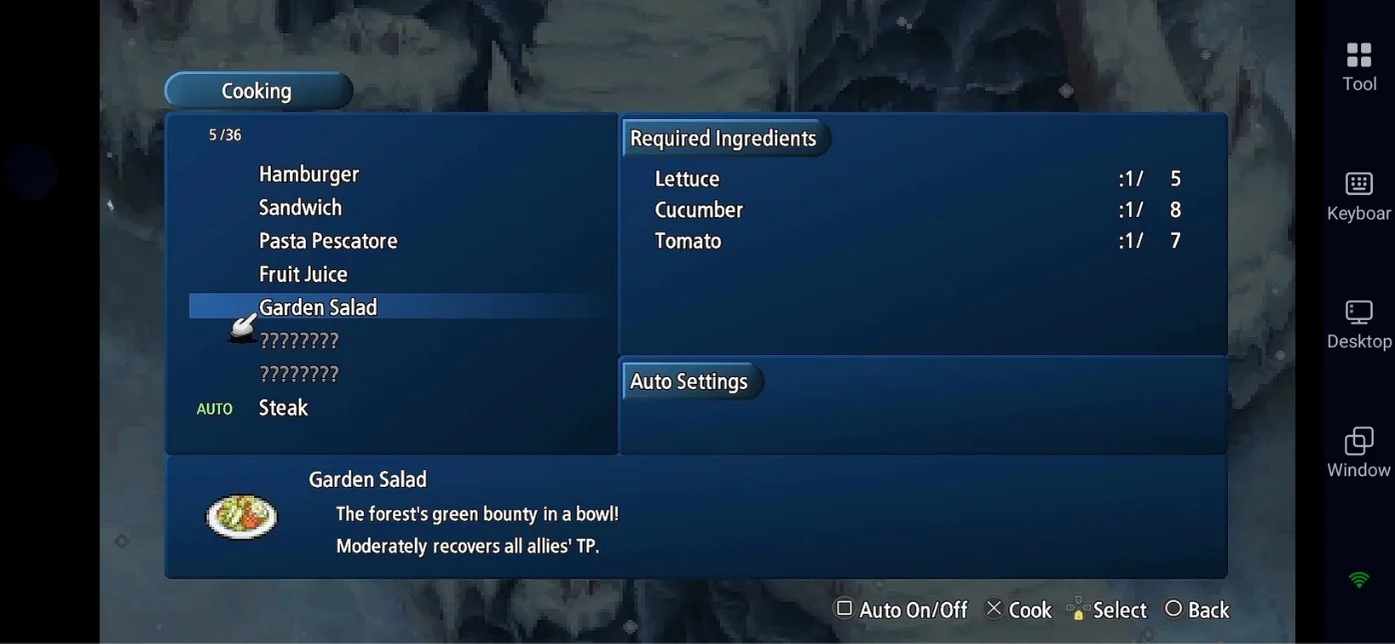
Look for the Wonder Chef in towns and other locations to learn new recipes. Different dishes provide different benefits, including HP or TP recovery and other useful effects. Collecting recipes early gives you more options for preparing your party without relying entirely on healing items.
Set Up Auto-Cooking
Auto-Cooking can prepare a selected dish after battles when its requirements are met and the necessary ingredients are available. Choose a recipe that suits your needs, such as one that restores HP or TP, and check your ingredient supply regularly. Remember that cooking proficiency affects how reliably a character prepares dishes, so using the system consistently can be beneficial.
Save Healing Items for When You Need Them
Keep useful gels and other recovery items available for emergencies, particularly when your party is running low on HP or TP before a difficult encounter. Cooking can help reduce your reliance on consumables, but it shouldn't replace carrying items for situations where you need immediate recovery.
Use Quick Recovery Between Battles
Quick Recovery offers a convenient way to prepare your party after an encounter. Use it when appropriate, then check your characters' HP and TP before entering another dangerous area. If your HP or TP remains low, use suitable items or cooking options rather than assuming one recovery method restores everything.
Plan Your Recovery Before Entering Dungeons
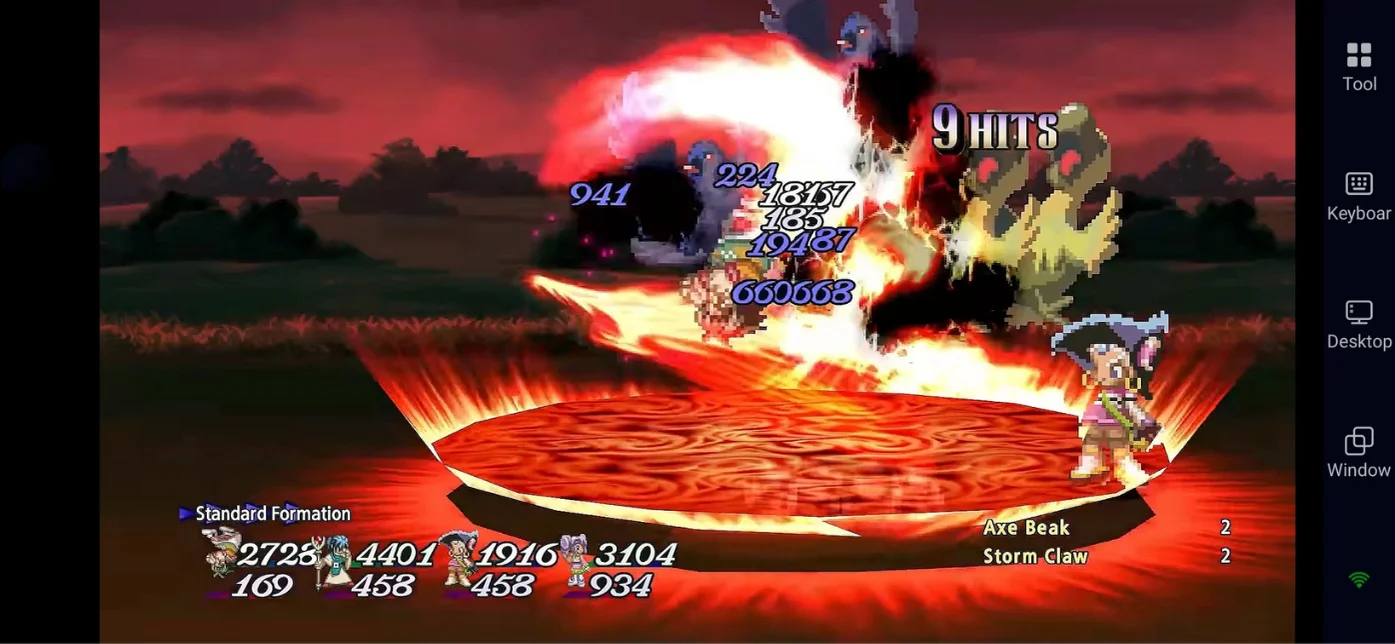
Before exploring a lengthy dungeon or challenging a boss, make sure your party has enough HP, TP, and healing items to handle several encounters. Avoid spending all your TP on minor enemies when you can rely on basic attacks or Artes that consume less TP. If you need to recover, do so before advancing into a more dangerous area.
Beginner tip: The remaster includes a setting that allows TP recovery while camping. If you want camping to help with resource management, check the Boost settings and enable it. Otherwise, remember that camping does not automatically restore TP or revive knocked-out characters.
Explore Towns, Dungeons, and Both Worlds
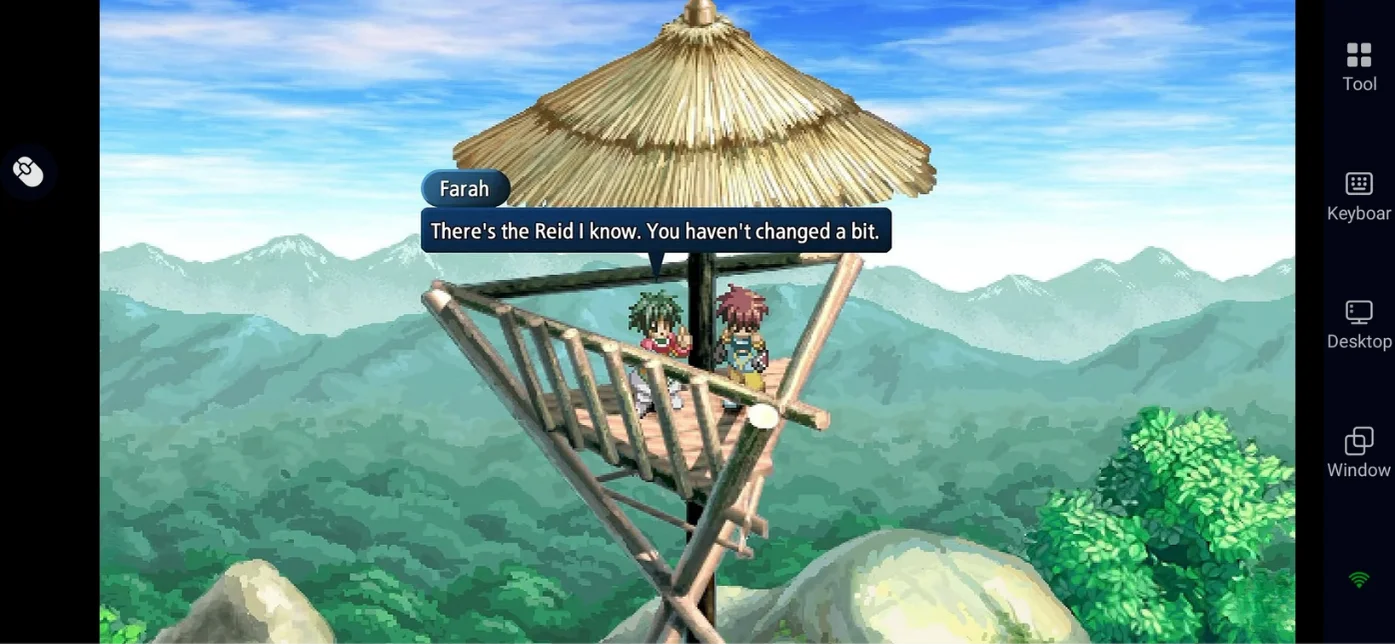
Your journey in Tales of Eternia Remastered takes you across Inferia and Celestia, with towns, dungeons, and hidden locations offering more than just the next story objective. Exploring carefully can uncover valuable items, cooking recipes, optional events, and additional conversations that help you get more out of the adventure.
-
Talk to NPCs and Check Your Surroundings: Speak with people in towns and revisit interesting locations when the story progresses. Some discoveries, including hidden items and optional interactions, aren't found simply by following the main objective.
-
Look for the Wonder Chef and Hidden Lenses: Keep an eye out for unusual objects and suspicious-looking corners when exploring towns and dungeons. Finding the Wonder Chef unlocks cooking recipes, while collecting hidden Lenses can lead to useful rewards later.
-
Pay Attention to Time-Sensitive Events: Some optional events become unavailable as the story advances. Check event markers when they appear, and don't automatically postpone every side activity until later if you want to experience as much of the game as possible.
-
Explore Dungeons Thoroughly: Check side paths, investigate unusual surroundings, and look for treasure chests before heading straight toward the exit. Some dungeons also feature environmental puzzles, so pay attention to objects and mechanisms that may help you progress.
-
Take Opportunities to Camp: Camping provides opportunities to see optional character skits that reveal more about the party's personalities and relationships. Take advantage of these moments when they become available instead of focusing exclusively on the main story.
Beginner tip: Follow the main story when you want to progress, but take time to explore each new location before leaving. A little curiosity can reward you with useful items, extra recipes, and character interactions that make the journey more rewarding.
Conclusion
With the tips in this Tales of Eternia Remastered beginner guide, you can improve your combat skills, manage HP and TP effectively, and prepare for tougher encounters. Make the most of each character's strengths, experiment with different Artes, and explore both worlds to uncover hidden rewards and optional content. If you want to continue your adventure away from your desk, OSLink lets you remotely play the PC version of Tales of Eternia Remastered on your phone.
 Download