English
Minecraft Dungeons II expands the original dungeon-crawling formula with a connected Overworld, a new dimension called the Sift, deeper equipment customization, improved enchanting, and more flexible co-op. You can play solo or with up to four players, explore main and side quests, enter caves and ruins, collect gear, and gradually shape your own combat style.
This Minecraft Dungeons II beginner guide explains the core systems, beginner-friendly builds, progression route, team roles, weapon combinations, and useful tips to help you get started without overcomplicating your first few hours.
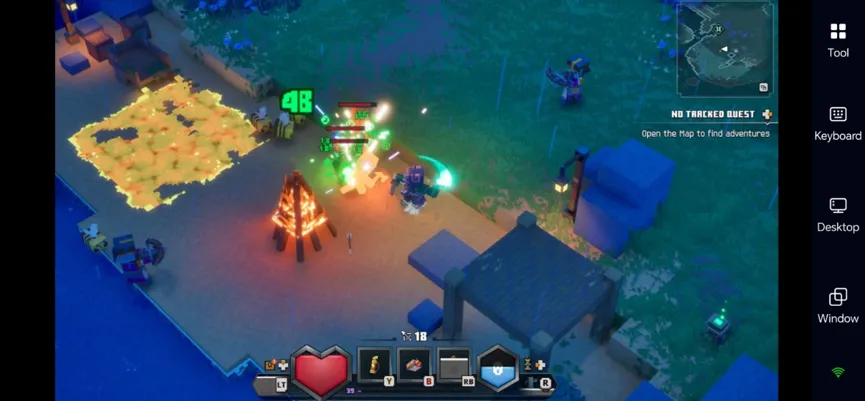
If you prefer playing Minecraft Dungeons II on PC, OSLink can also let you remotely access your PC from your phone. This makes it easier to continue the PC version while away from your desk, whether you want to explore another area, manage equipment, or make a little more progress without switching to a separate version of the game.
Minecraft Dungeons II Overview and Gameplay
Minecraft Dungeons II is an action RPG rather than a traditional Minecraft survival game. The basic Minecraft Dungeons II gameplay loop is:
Explore → Fight enemies → Complete quests → Collect gear → Improve your build → Enter harder areas.
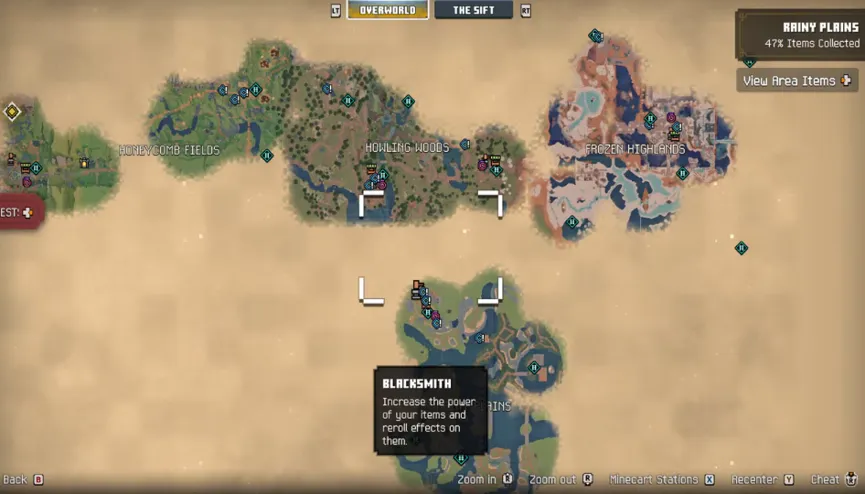
Unlike the first game, the world is more interconnected. Large regions contain settlements, quests, structures, fast-travel points, caves, ruins, and other optional areas. You will also eventually explore the Sift, a completely different dimension with its own threats.
There are no traditional classes such as Warrior, Mage, or Ranger. Your equipment determines your role.
|
Gear Type |
Slots |
Main Purpose |
|
Melee Weapon |
1 |
Close-range damage |
|
Ranged Weapon |
1 |
Safe ranged pressure |
|
Armor |
4 |
Helmet, chestplate, leggings, boots |
|
Artifacts |
3 |
Active combat abilities |
|
Talismans |
3 |
Passive bonuses and build synergy |
This gives you 12 combat equipment slots, so builds have much more room for specialization than in the original game.
Recommended Beginner Builds
When learning how to play Minecraft Dungeons II, avoid chasing a perfect endgame build immediately. Use the strongest gear you find while gradually moving toward one clear playstyle.
|
Build |
Main Idea |
Best For |
|
Melee Bruiser |
Heavy melee weapon + defensive gear + recovery effects |
New players wanting high survivability |
|
Ranged Fighter |
Bow/Crossbow + mobility + ranged bonuses |
Safe, mobile gameplay |
|
Artifact Build |
Build around three synergistic Artifacts |
Players who enjoy active abilities |
|
Pet/Support Build |
Companion Talismans + healing/support effects |
Co-op and safer progression |
|
Hybrid Build |
Ranged opener + melee finisher + Artifact burst |
Best general beginner setup |
The Hybrid Build is a particularly good starting point because it teaches every major combat system without locking you into one weapon type.
Ranged ammunition now automatically regenerates, so do not treat your bow as an emergency-only weapon. Use ranged attacks regularly to weaken dangerous enemies before they reach you.
Enchantments and Building Your Character
Minecraft Dungeons II introduces a more flexible enchantment system.
During exploration, you can obtain Enchantment Books, which expand the effects available to you. The Enchantsmith then lets you apply suitable enchantments to equipment and improve them further.
This means you should not compare equipment using Power alone.
A slightly weaker weapon with effects that match your Artifacts, Talismans, and preferred combat style can sometimes be more useful than a higher-stat item with poor synergy.
For beginners, prioritize:
Survivability first → reliable damage second → build synergy third.
Once staying alive becomes easy, gradually replace defensive bonuses with more specialized offensive effects.
Beginner Progression Route
A simple progression route works better than trying to clear every corner of the map immediately.
Follow this general order:
Main Quest → Nearby Side Quests → Optional caves/ruins → Gear upgrades → Enchantments → Continue the Main Quest.
Main quests move the adventure forward, while side quests provide additional experience and potential gear rewards.
Explore paths that are close to your current objective, especially when you see caves, ruins, hidden areas, or platforms reachable through jumping. However, do not repeatedly backtrack just to clear every optional location before advancing the story.
Fast-travel locations make later exploration easier, so unlocking them naturally as you progress saves time.
Team Roles and Weapon Combinations
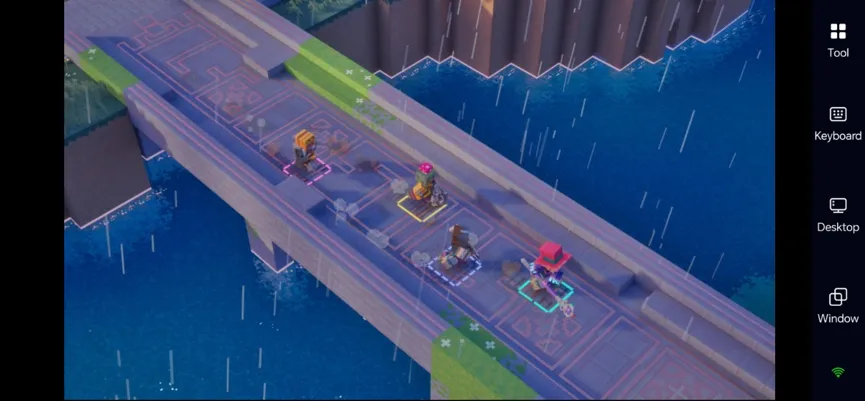
Minecraft Dungeons II supports up to four-player co-op, including local play, online cross-play, matchmaking, and party codes.
There are no forced MMO-style roles, but dividing responsibilities makes difficult fights easier.
|
Player |
Suggested Role |
Gear Direction |
|
P1 |
Frontline |
Heavy melee + defensive effects |
|
P2 |
Ranged DPS |
Bow/Crossbow + damage bonuses |
|
P3 |
Support |
Healing, pets, support Talismans |
|
P4 |
Burst/Flex |
AoE Artifacts + mixed weapons |
A good team should avoid having all four players perform exactly the same job.
Frontline players can keep dangerous enemies occupied while ranged characters attack safely. Support players can improve survivability, while a flexible damage build handles large enemy groups or elite targets.
Solo players can imitate this structure through equipment: use a sturdy melee weapon, a ranged option, and Artifacts that cover the gaps left by your weapons.

 Pre-set Keymaps for Easy Play

Minecraft Dungeons II Beginner Tips
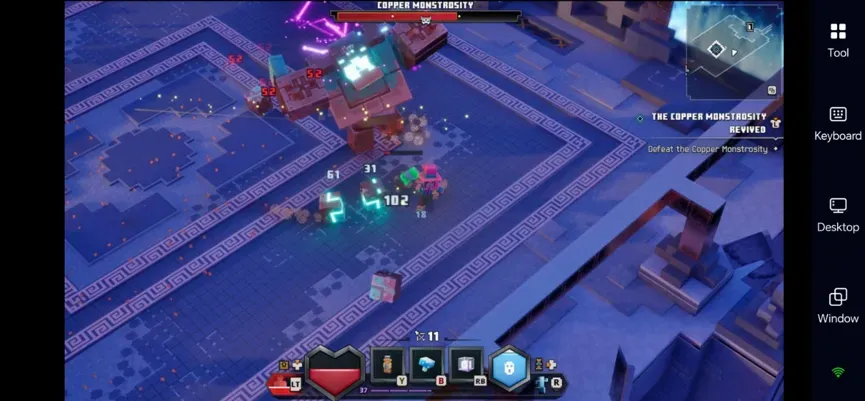
One of the most important Minecraft Dungeons II beginner tips is to keep moving. Dodge Roll and the new Jump mechanic are useful in combat as well as exploration. Avoid standing beside bosses simply because your melee weapon deals high damage.
Use ranged attacks before entering dangerous groups, then switch to melee once enemies close the distance. Save powerful Artifacts for elite packs or difficult moments, but do not hold them forever waiting for a “perfect” situation.
Also check your equipment regularly. With four armor slots, three Artifacts, and three Talismans, one new drop may open an entirely different build direction.
Do not ignore exploration either. Hidden routes, caves, ruins, and elevated areas can contain useful rewards, and Jump allows you to reach places that would have been inaccessible in the first game.
Finally, remember that Minecraft Dungeons II is designed around experimentation. There is no fixed class forcing you into one playstyle, so change weapons, Talismans, Artifacts, and enchantments whenever you find a combination that works better. If you mainly enjoy the PC version, OSLink can also help you continue playing it from your phone, making it easier to keep exploring, collecting gear, and refining your build when you are away from your computer.
 Download