English
The Witcher 3: Wild Hunt – Remastered gives you more freedom to shape Geralt the way you want to play, but its redesigned skill system means both Witcher 3 beginners and veteran players may need a quick refresher, especially since older builds may no longer work the same way. Skills now follow a more structured progression, while Mutagens, equipment, combat preparation, and late-game Mutations all play a role in shaping your character. Whether you prefer fast swordplay, powerful Signs, heavy attacks, Alchemy, or a flexible Hybrid setup, understanding how these systems work together is key to building Geralt effectively.
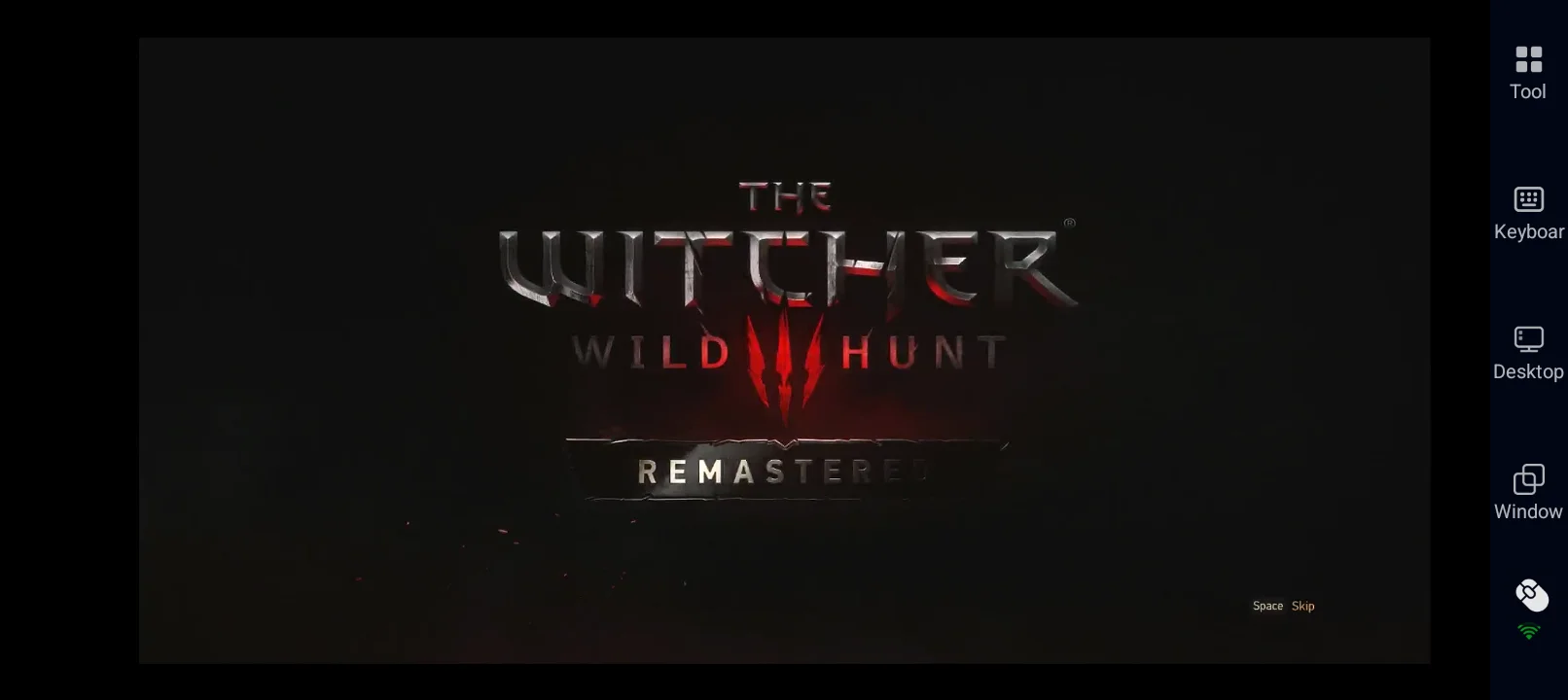
In this The Witcher 3: Wild Hunt – Remastered Best Builds Guide, we'll start with the fundamentals of the new build system before moving into complete setups for different playstyles. You'll learn how to develop your skills, match Mutagens and gear to your build, prepare for different enemies, and gradually specialize Geralt as you progress. OSLink lets you play The Witcher 3: Wild Hunt – Remastered on mobile, giving you a convenient way to keep testing different builds, refining your skills, and experimenting with your setup even when you're away from your PC.
What's New in The Witcher 3 Remastered?
The Remastered version keeps the same Geralt, story, world, and core gameplay, but several systems that affect character progression, combat, and equipment have been changed or improved. If you're coming from the original game, these changes are worth understanding before following a build.
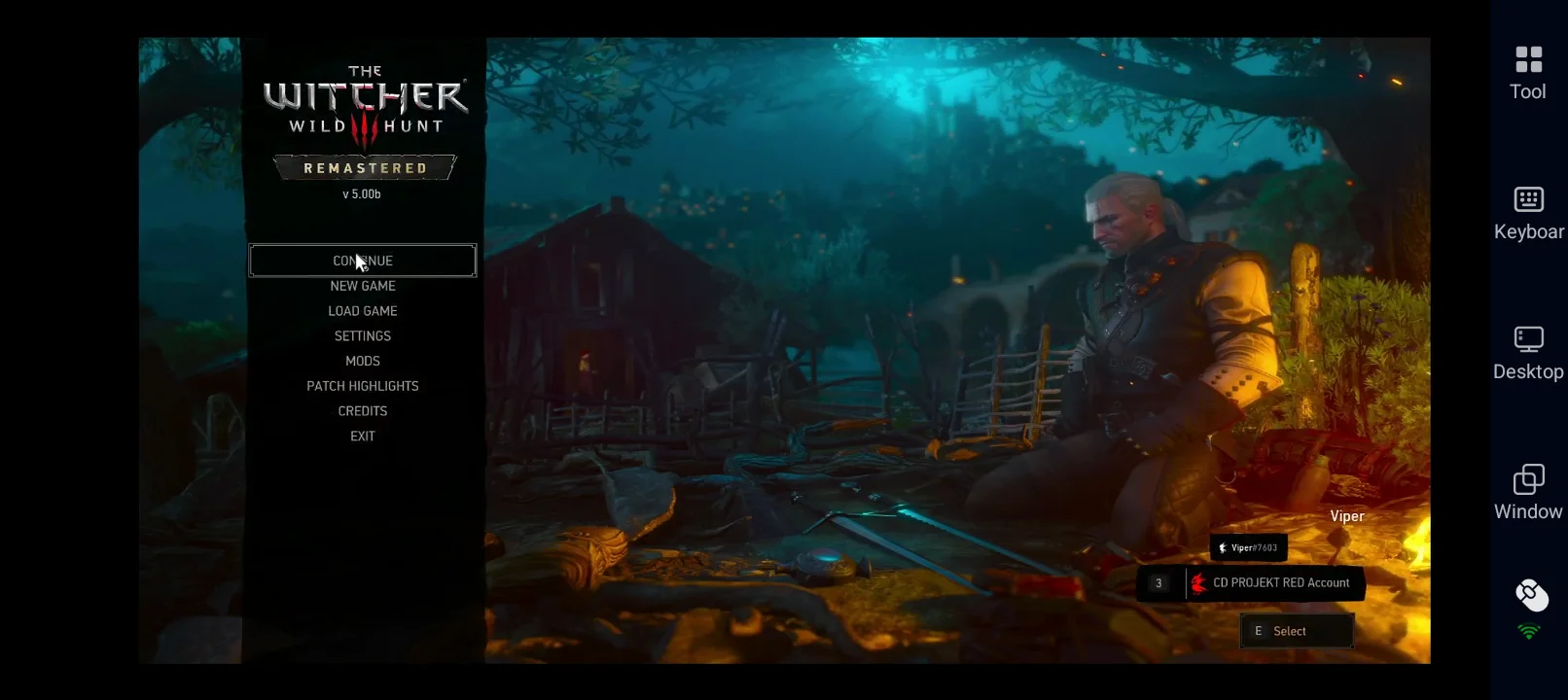
The biggest change for build creation is the reworked skill system. Skills now follow a more structured progression with three ranks and prerequisites, while their effects and synergies have also been rebalanced. Existing skill points are reset to accommodate the redesigned system, so older builds may not translate directly even if their overall playstyle still works.
Combat has also received various improvements, including changes to Geralt's movement, animations, targeting, enemy behavior, and camera systems. Reforging also gives you more freedom with equipment appearance, allowing you to focus on gear that benefits your build without being locked into its original look.
You don't need to memorize every Remastered change before starting a build. The important thing is understanding how the new skill system, combat changes, equipment, and progression affect the way you develop Geralt. The next sections break down those systems before we move into the actual builds.
How Character Builds Work in Remastered
Before choosing a specific build, it helps to understand the basic system behind it. Every build in The Witcher 3: Wild Hunt – Remastered starts with the same foundation: Ability Points unlock skills, while the skill tree determines how those skills can be developed and combined.
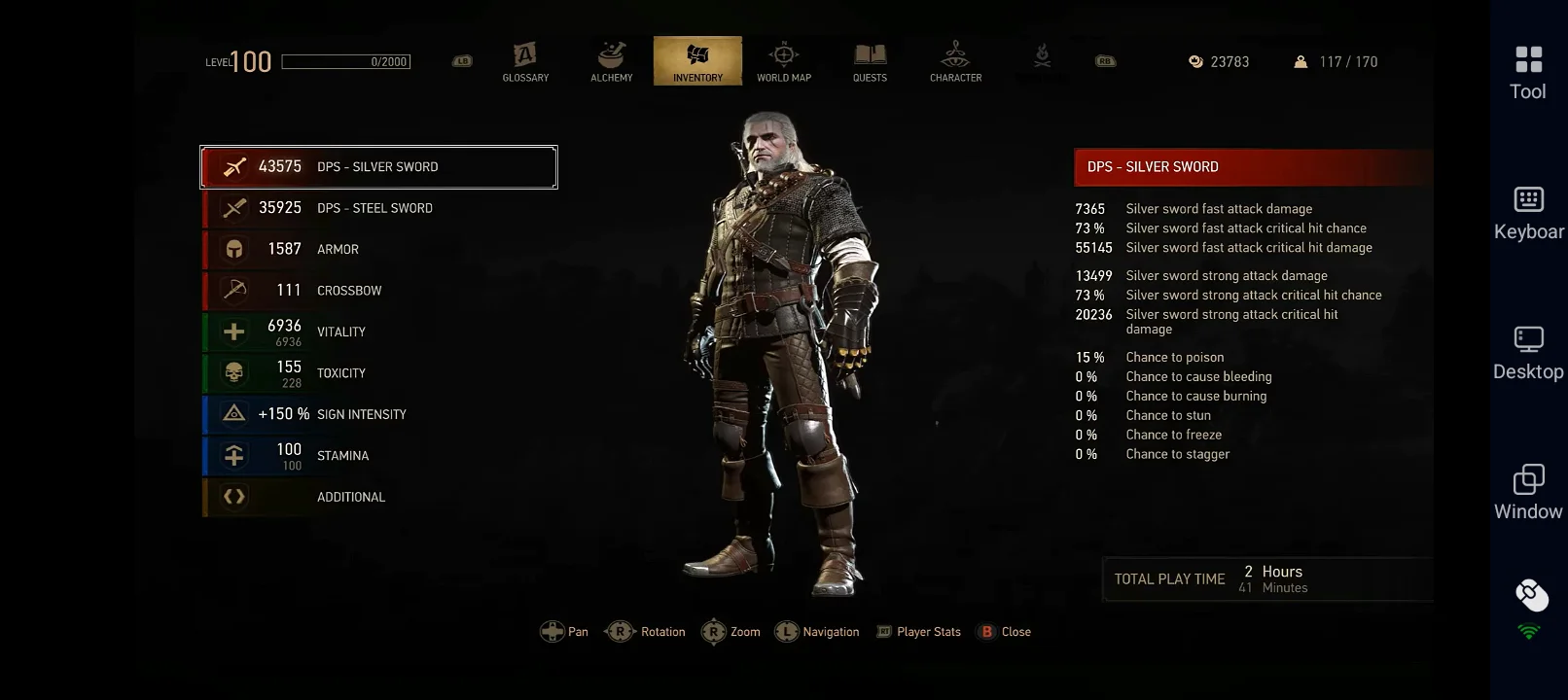
You don't need to plan Geralt's entire endgame character from the beginning. The important thing is to understand how your points move through the tree and spend them on skills that support the way you actually play.
Ability Points and the New Skill Tree
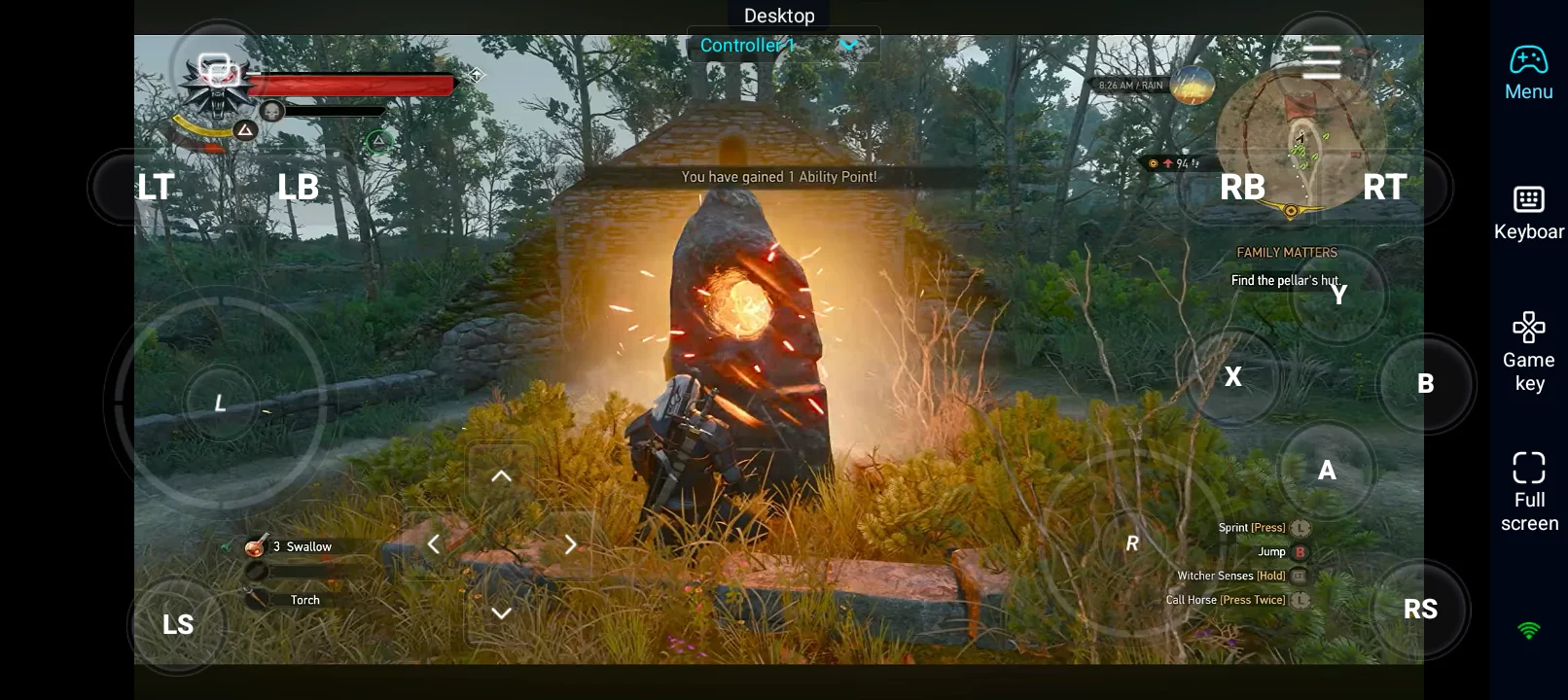
Ability Points unlock and improve Geralt's skills. You gain them through progression, including leveling up and discovering Places of Power, then spend them on the skills available in the character development system.
The Remastered skill tree gives these points a more structured progression path. Skills are divided into categories such as Combat, Signs, and Alchemy, with each skill having three ranks, while deeper options require specific prerequisites. In practice, progression follows a simple path:
Choose a foundation → Unlock prerequisites → Develop the skill → Specialize further
For new players, don't hoard points waiting for a perfect endgame build. Spend them on skills that strengthen the way you're currently playing while keeping a general direction in mind. If you're enjoying sword combat, for example, build around Combat skills rather than spreading your early points evenly across every category.
You won't always be able to jump directly to the skill you want, so pay attention to the path you're taking through the tree. Your early choices don't need to match your final build. As you progress, you can refine your specialization or respec if you decide to take Geralt in a different direction.
The basic idea is to spend your points, but give them a direction. Unlock skills that strengthen your build now while keeping an eye on where you want the skill tree to take you next.
Skill Slots, Active Skills, and Mutagens
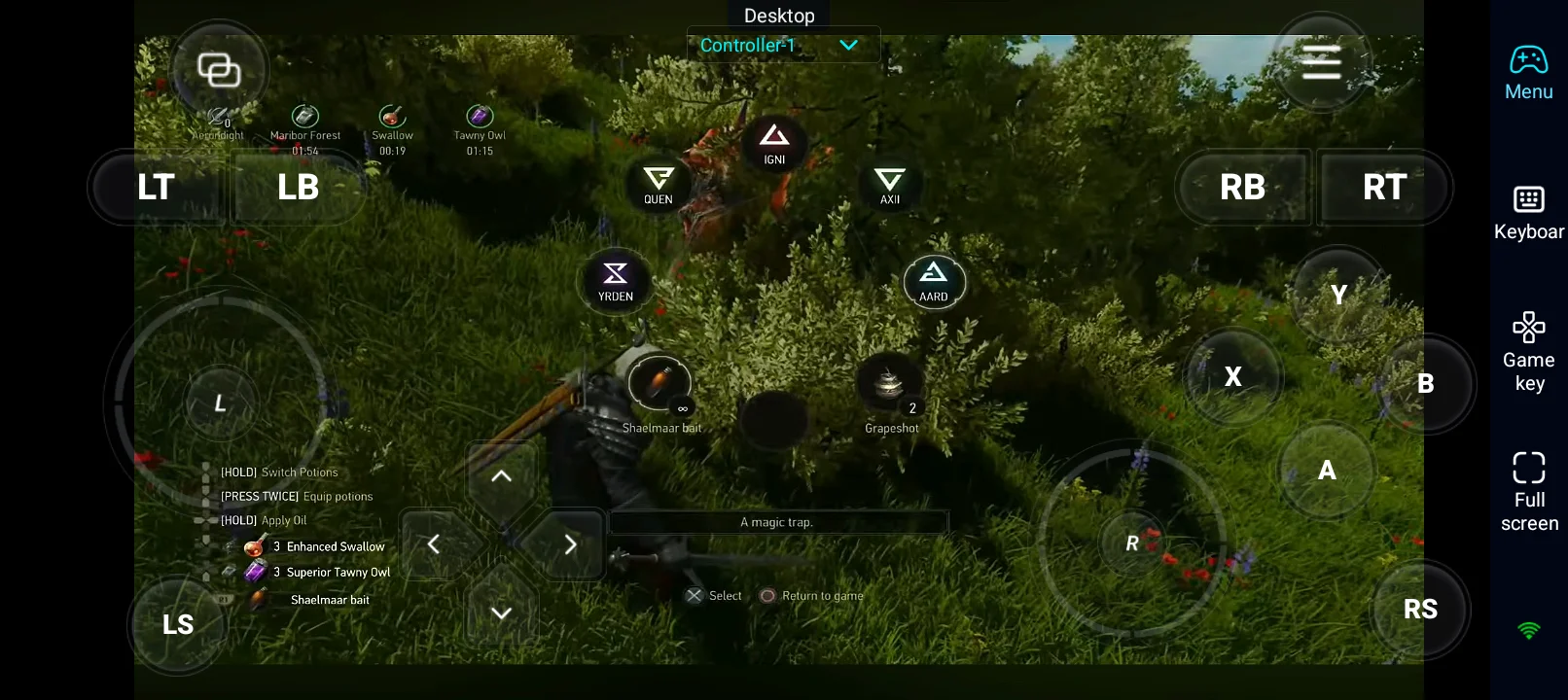
Unlocking a skill doesn't automatically make it part of your build. You unlock skills through the skill tree, then choose which ones to equip in your active slots. As your character develops, you'll have more options than you can use at once, so your build should focus on the skills that work best together.
Think of it simply:
Unlock a skill → Equip it → Build around it
Your available slots mean you have to make choices. A skill can be useful without necessarily being worth a place in your current setup. You can also change your equipped skills as your playstyle and build develop.
A simple way to organize those choices is:
-
Core Skills → Define your main strategy
-
Supporting Skills → Strengthen your core strategy
-
Utility Skills → Provide defense, control, or situational benefits
For example, a sword-focused build might use Fast Attack skills as its core, Combat abilities that improve their effectiveness as support, and Quen or another defensive option as utility.
Once you've chosen your main skills, Mutagens can further reinforce the direction of your build. They are placed in dedicated slots alongside your active skills, and their color corresponds to the type of abilities they complement.
-
Red Mutagens — Combat: Best suited to sword and other Combat-focused skills.
-
Blue Mutagens — Signs: Designed to complement Sign-focused abilities.
-
Green Mutagens — Alchemy: Suited to Alchemy-focused skills and Toxicity-based builds.
The basic idea is:
Skill specialization → Matching Mutagen → Stronger build identity
You don't need to perfectly optimize every Mutagen slot from the beginning. Build your core skills first, then use matching Mutagens to reinforce them as more slots become available.
Choose the build first; use your Mutagens to strengthen it.
Understanding Build Synergy
A good build isn't simply a collection of powerful skills. The important part is how those skills, equipment, and other systems work together. Start with the way you want to deal damage, then choose supporting abilities that strengthen it and cover its weaknesses.
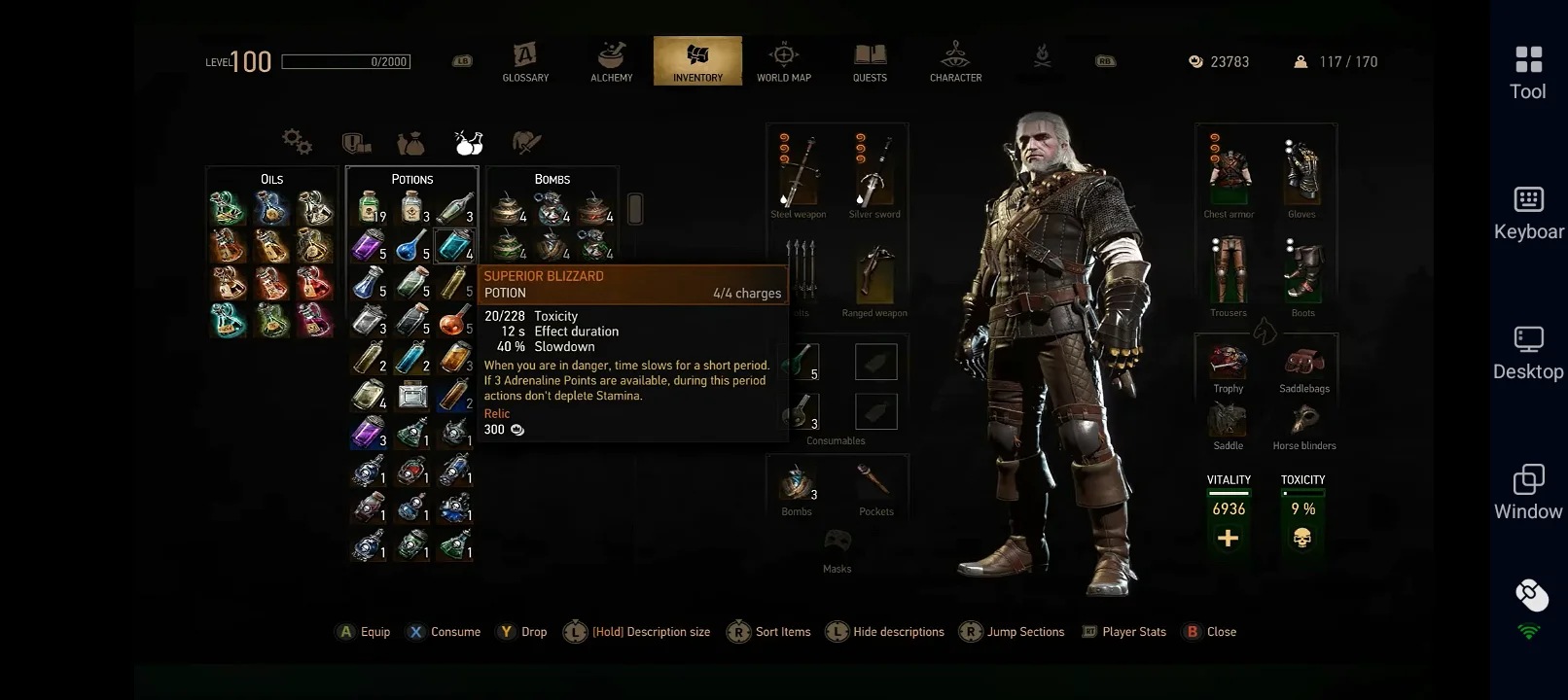
A simple build structure is:
Primary Damage → Support → Defense → Utility → Mutagen
For example:
Fast Attacks → Critical Support → Mobility → Quen → Red Mutagen
The Fast Attacks provide the main damage, while the other choices strengthen that playstyle or help cover situations where it is vulnerable. You don't need every possible powerful skill—you need the right combination for the way you want to play.
Don't ask, “What are the best skills?” Ask, “What works best together?”
Preparing Geralt for Battle
A good build tells you how Geralt fights; preparation helps you adapt that build to the enemy in front of you. Before difficult encounters, use the Bestiary to identify the enemy and then choose the tools that complement your build.
The basic loop is:
Identify the enemy → Check its weaknesses → Prepare → Fight
Your Main Preparation Tools
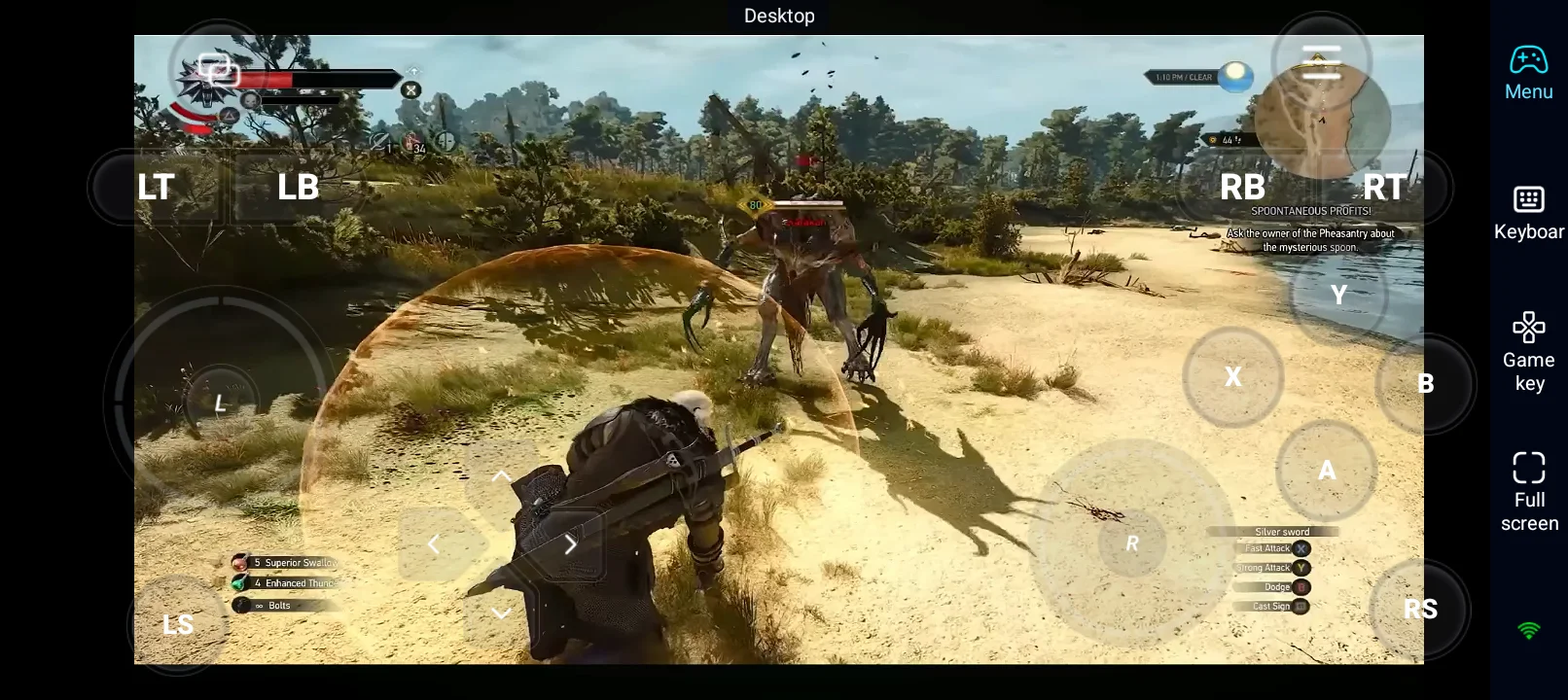
- Oils — Apply the appropriate oil to your sword to improve its effectiveness against specific enemy types.
-
Potions — Provide temporary effects that can improve damage, survivability, or other aspects of combat.
-
Bombs — Offer damage, crowd control, or situational utility when your normal attacks aren't the best answer.
-
Decoctions — Provide stronger, longer-lasting effects and become particularly valuable for specialized Alchemy builds.
These tools don't need to be used before every fight. Choose what the situation actually calls for. A Combat build might mainly rely on oils and a useful potion, while a dedicated Alchemy build may rely much more heavily on decoctions and Toxicity.
Toxicity
Toxicity is the resource that limits how much Alchemy Geralt can use at once. Potions and decoctions contribute to Toxicity, making it an important consideration for builds that rely heavily on Alchemy.
For most beginners, simply understanding and managing Toxicity is enough. For an Alchemy-focused build, it becomes a much more important part of the character's overall strategy.
Your build determines what Geralt does best. Preparation determines how you adapt it to the enemy.
Mutations — Taking a Build to the Next Level
Mutations are a late-game character development system that can take an established build in a more specialized direction. They become relevant after you've developed your core skills and have a clear idea of how you want Geralt to fight.
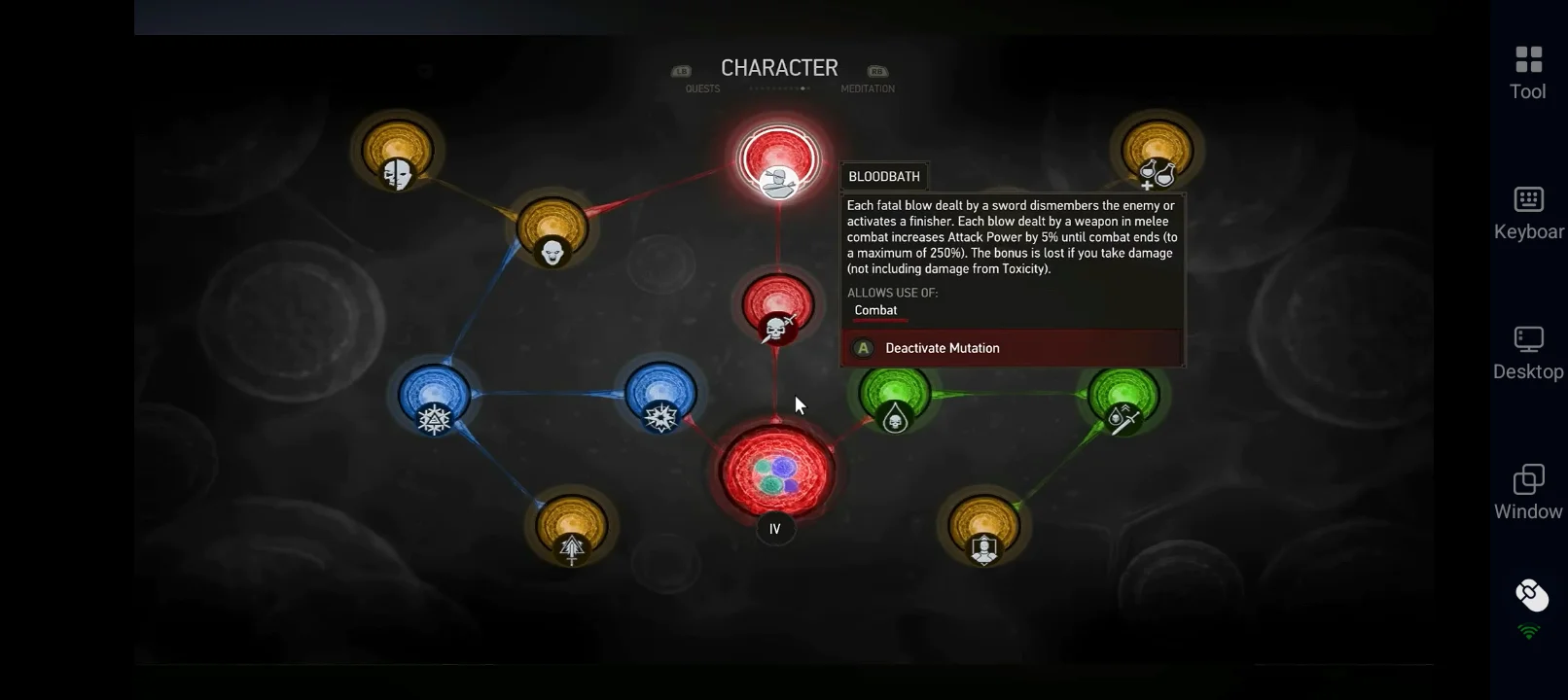
What Are Mutations?
Mutations provide additional abilities that strengthen specific playstyles. They work alongside your existing skills rather than replacing them, making them an additional layer of specialization.
A sword-focused build, for example, can use mutations that enhance its combat style, while an Alchemy-focused build can choose mutations that complement its Toxicity and potion-based setup.
When Do Mutations Matter?
Don't plan your entire early-game build around a mutation you won't have access to yet.
A simple progression is:
Early Game → Core Skills
Mid Game → Main Specialization
Late Game → Mutation & Further Specialization
Your early-game character doesn't need to look exactly like your eventual endgame build. Leave room to experiment and refine your direction as you progress.
Mutations Should Complement Your Build
Think of a mutation as the next layer of your existing build synergy:
Primary Damage → Supporting Skills → Mutagens → Equipment → Mutation
The mutation should reinforce the direction you've already chosen rather than forcing you to rebuild the entire character around it.
Build the character first. Optimize it with mutations later.
Building Your Gear Setup
Skills define what Geralt can do, while gear determines how effectively he can do it. Weapons, armor, runestones, glyphs, and other upgrades should reinforce the playstyle you've already chosen.
Don't automatically replace equipment just because it has a higher level or damage value. Look at the bonuses and how they fit your build.
Weapons
Geralt's two main sword types have different roles:
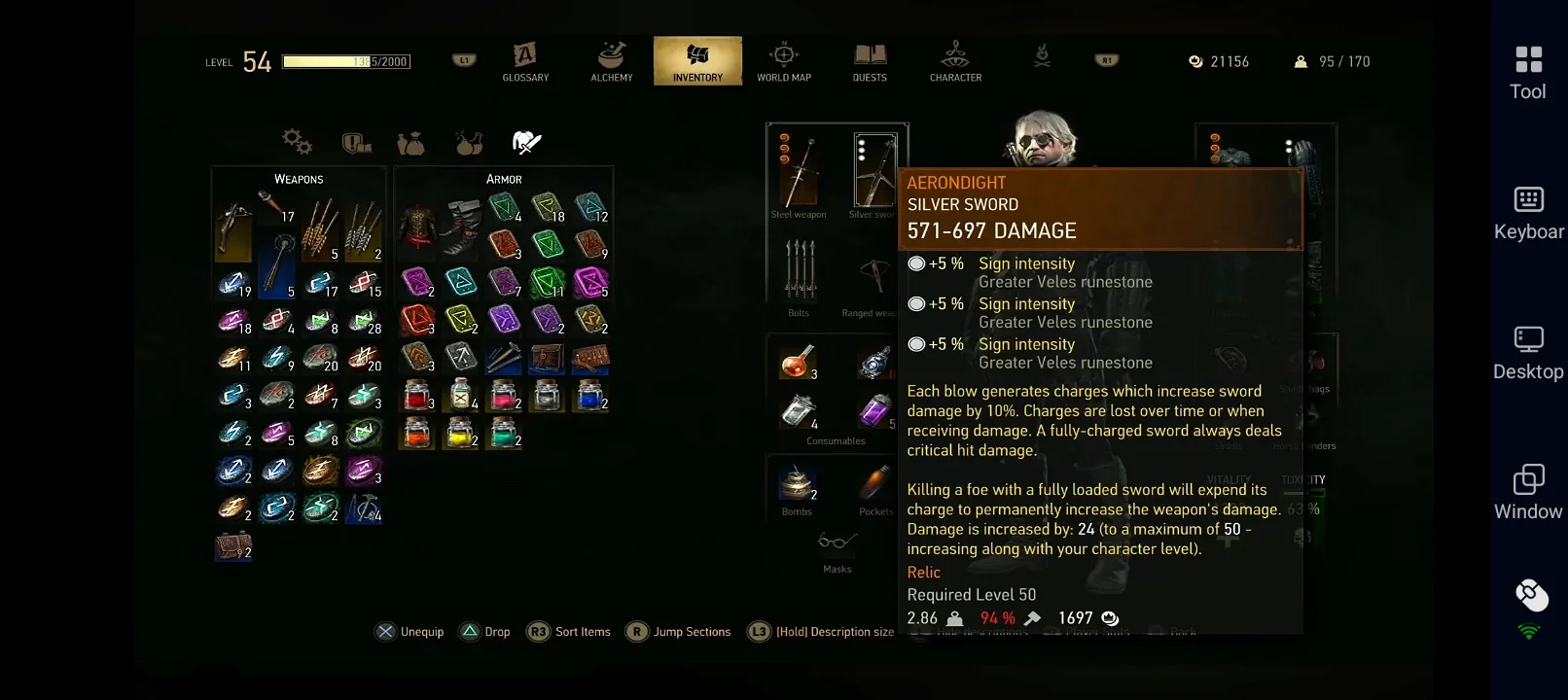
- Steel Swords — primarily used against humans and other non-monster enemies.
-
Silver Swords — primarily for monsters.
Beyond base damage, look for bonuses that support your build, such as attack power, critical effects, Sign-related bonuses, or other useful properties.
Armor
Choose armor for what it adds to your build, not simply for its armor value.
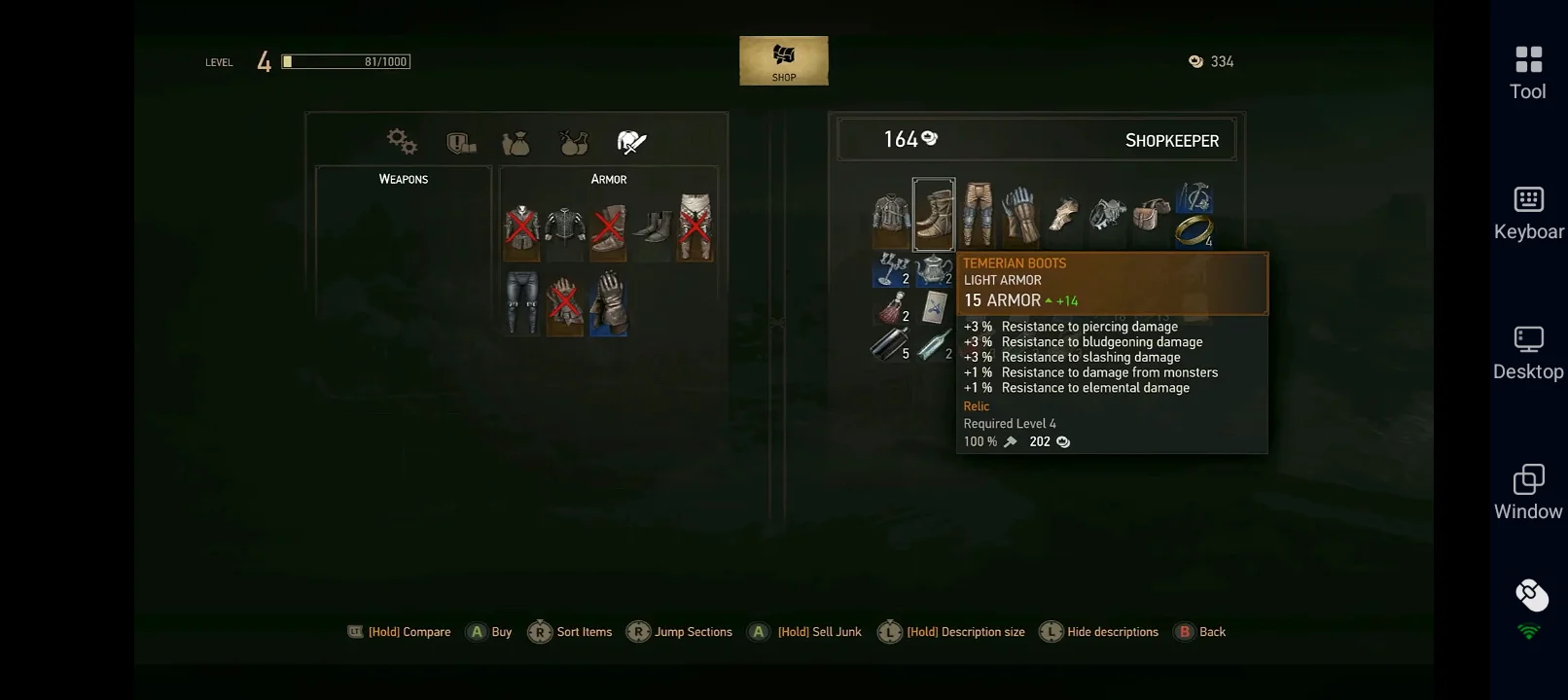
Witcher School gear provides natural directions for different playstyles:
|
School |
Build Direction |
|
Feline / Cat |
Fast, aggressive sword combat |
|
Griffin |
Signs and magical combat |
|
Ursine / Bear |
Heavy combat and durability |
|
Wolven / Wolf |
Flexible hybrid builds |
|
Manticore |
Alchemy and Toxicity |
These are directions, not strict rules. Your actual stats and bonuses should matter more than wearing a particular set simply because it belongs to a certain school.
Runestones, Glyphs & Enchantments
Equipment upgrades should strengthen what your build already does well.
Runestones can improve swords, while glyphs enhance armor and related equipment. Later options can give you even more control over how your gear supports a particular specialization.
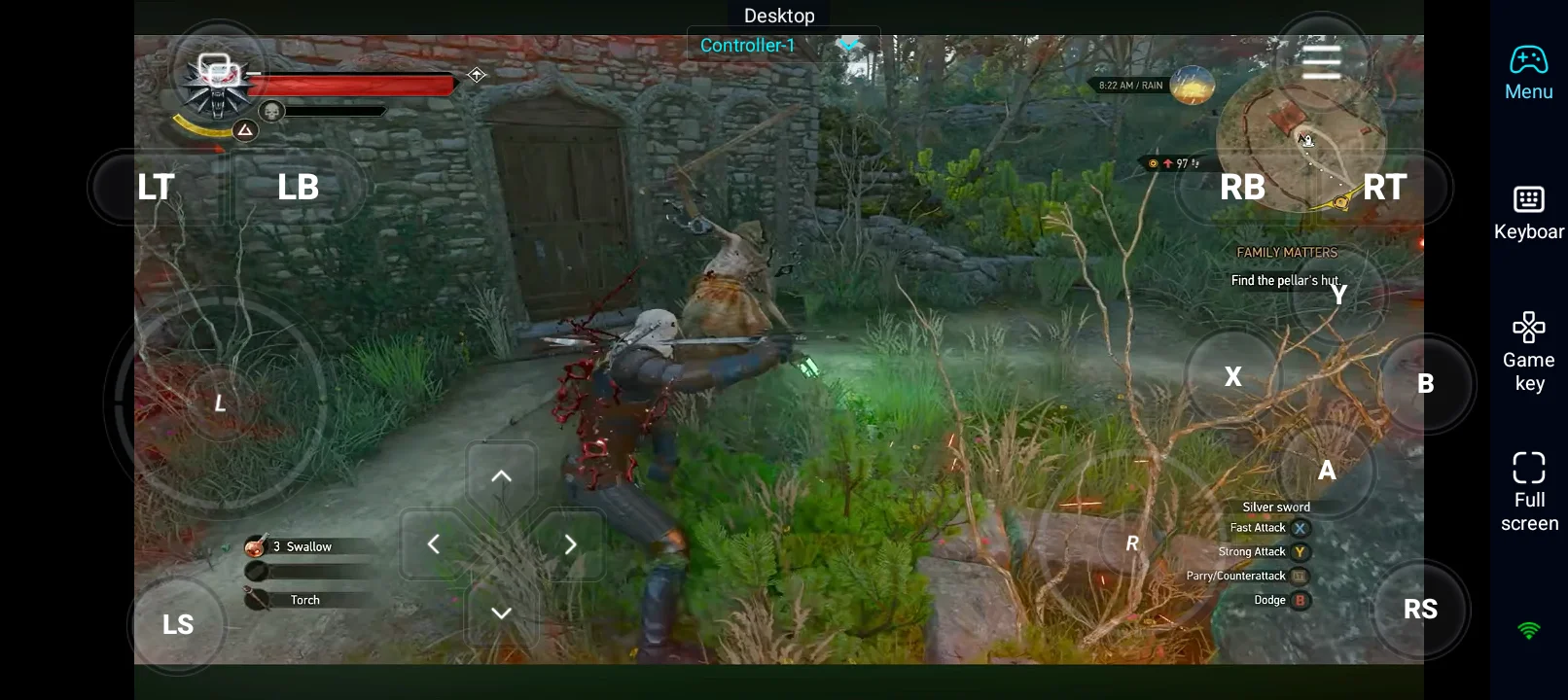
Don't choose an upgrade because it sounds powerful. Choose it because it improves your build.
The specific choices will be covered inside each build rather than creating one universal setup.
Reforging
Reforging separates equipment appearance from performance, allowing you to prioritize useful stats and bonuses without being locked into a particular look.
Choose gear for the build → Reforge its appearance if desired.
This keeps equipment optimization and visual customization separate.


 Pre-set Keymaps for Easy Play

Build #1 — Fast Attack Feline
Playstyle: Fast sword attacks, mobility, and aggressive close-range combat
Core Focus: Combat
Gear Direction: Feline
Mutagen: Red
Best For: Players who want a straightforward sword-focused build
The Fast Attack Feline build is built around one simple idea: deal damage quickly while using movement and dodging to avoid incoming attacks. Instead of investing across multiple systems, the build keeps Combat as its foundation and uses a small number of supporting tools to cover its weaknesses.
You don't need the finished Feline setup at the beginning of the game. Start by strengthening your Fast Attack foundation, then add Combat skills that improve your damage and support the way you fight. As the character develops, move toward Feline gear and your preferred late-game Combat specialization.
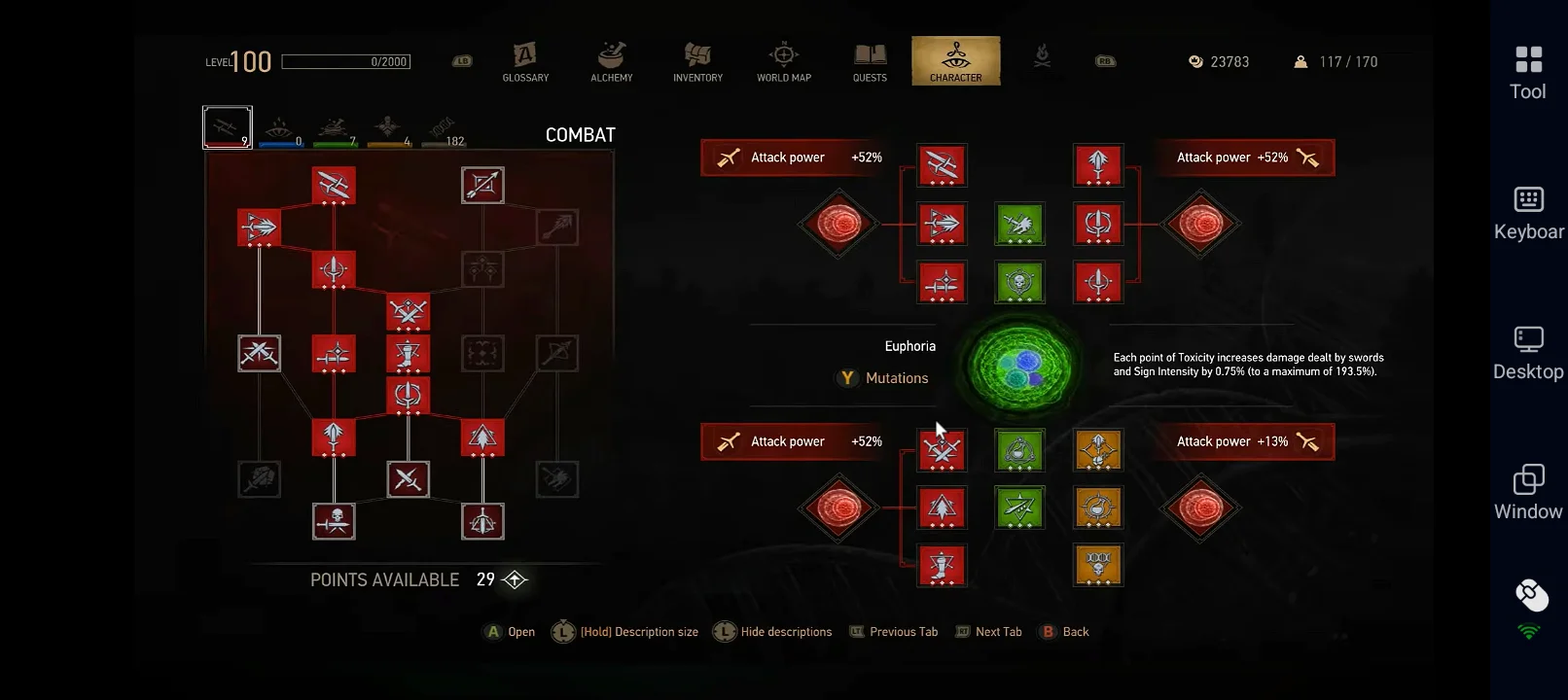
Build Priorities
|
Category |
Focus |
|
Core Damage |
Fast Attacks |
|
Support |
Combat damage and critical-hit abilities |
|
Defense |
Dodge + Quen |
|
Mutagen |
Red |
|
Armor |
Feline |
|
Preparation |
Enemy-specific Oils and selected Potions |
|
Late Game |
Combat-focused Mutation |
Skill progression: Start with your Fast Attack foundation, then prioritize skills that directly strengthen your sword damage and critical potential. Add defensive or mobility options when needed rather than spreading points into unrelated categories.
Gear progression: Use suitable early-game equipment while developing the character, then transition into Feline Witcher Gear as it becomes available. You don't need to delay the build until you have the complete set.
Combat: Apply the appropriate oil before difficult monster encounters, use Quen when you need a safety buffer, then stay aggressive with Fast Attacks and dodge incoming strikes. Against groups or situations where sustained area damage is useful, bring the relevant Combat abilities into your active setup.
The finished build should feel fast, aggressive, and mobile. Rather than standing still and absorbing attacks, you're constantly repositioning, looking for openings, and using your Combat skills to keep pressure on the enemy.
Build path: Fast Attacks → Combat Damage → Critical Support → Mobility/Defense → Feline Gear → Late-Game Specialization
Build #2 — Sign-Focused Griffin
Playstyle: Sign-based combat, crowd control, and flexible battlefield control
Core Focus: Signs
Gear Direction: Griffin
Mutagen: Blue
Best For: Players who want to use Geralt's Signs as a major part of their combat strategy
The Sign-Focused Griffin build makes Signs the main source of combat utility and damage, while the sword remains an important backup for finishing enemies and situations where Signs aren't the ideal answer. Rather than trying to maximize every Sign at once, the build works better when you focus on the Signs that fit the way you actually fight.
Start by establishing your preferred Sign foundation, then invest further into Sign skills that improve your ability to control enemies and maintain your Sign-based combat rhythm. As the build develops, Griffin gear and matching Blue Mutagens reinforce that specialization.
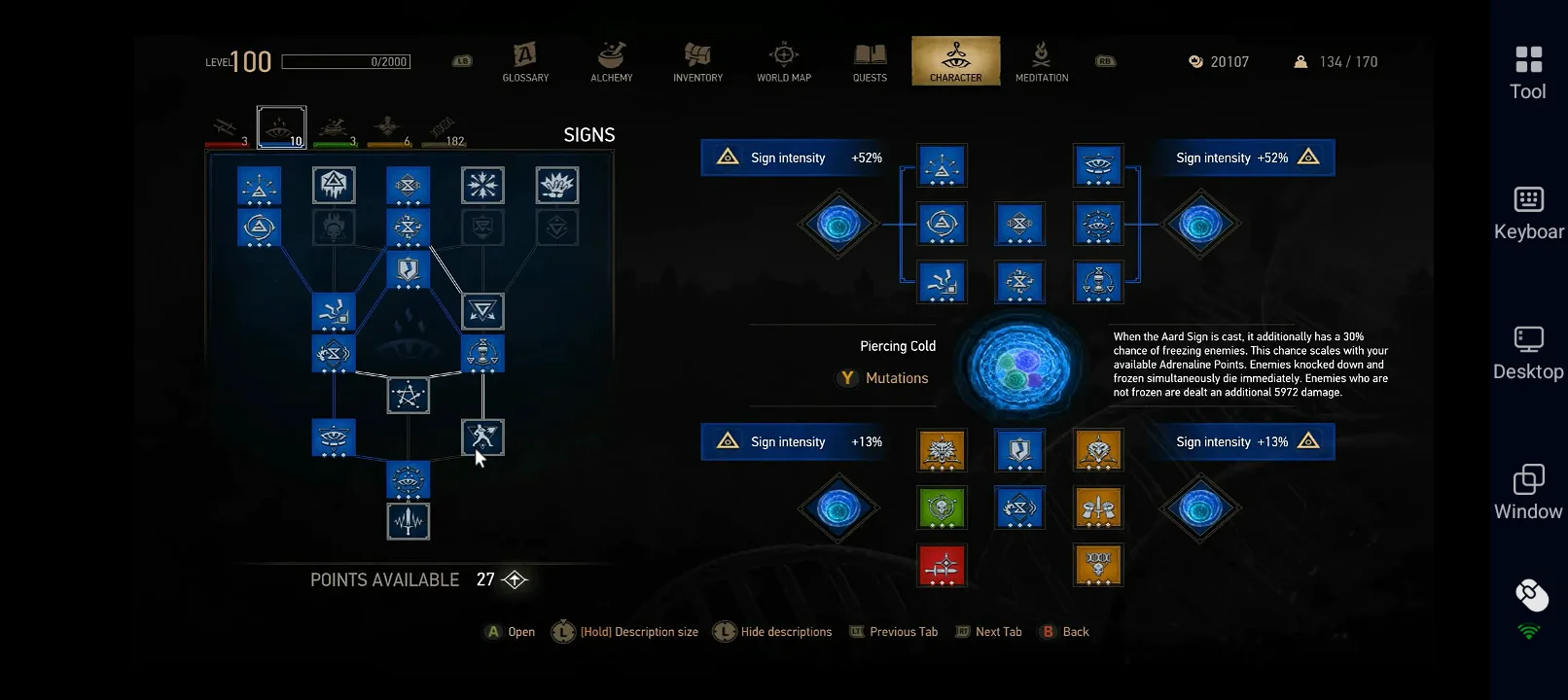
Build Priorities
|
Category |
Focus |
|
Core Damage |
Signs |
|
Support |
Sign intensity, stamina and Sign effectiveness |
|
Defense |
Quen |
|
Control |
Aard / Yrden / Igni depending on situation |
|
Mutagen |
Blue |
|
Armor |
Griffin |
|
Preparation |
Oils + selected Potions |
|
Late Game |
Sign-focused Mutation |
Skill progression: Start with the Sign abilities you use most often rather than investing equally into all five Signs. Build around a primary Sign or combination of Signs, then add supporting abilities that improve stamina management and overall Sign effectiveness.
Gear progression: Use whatever suitable equipment you find early on, then gradually move toward Griffin Witcher Gear as your Sign specialization develops. Griffin gear should be viewed as the natural progression of the build rather than something you need to obtain before the build becomes effective.
Combat: Use your Signs to control the battlefield rather than simply casting them whenever they're available. Quen provides a defensive safety net, while Aard, Igni, and Yrden can be selected according to the enemy and situation. Your sword remains important for dealing with enemies when a Sign isn't the best tool.
The finished build should feel less like a traditional swordfighter and more like a Witcher controlling the fight before closing in for the kill. You're using Signs to create openings, control enemies, protect yourself, and then taking advantage of those openings with your sword.
Build path: Sign Foundation → Primary Sign Specialization → Sign Support → Stamina/Defense → Griffin Gear → Late-Game Specialization
Build #3 — Heavy Combat Ursine
Playstyle: Heavy attacks, durability, and deliberate swordplay
Core Focus: Combat
Gear Direction: Ursine
Mutagen: Red
Best For: Players who prefer powerful attacks and a more forgiving defensive setup
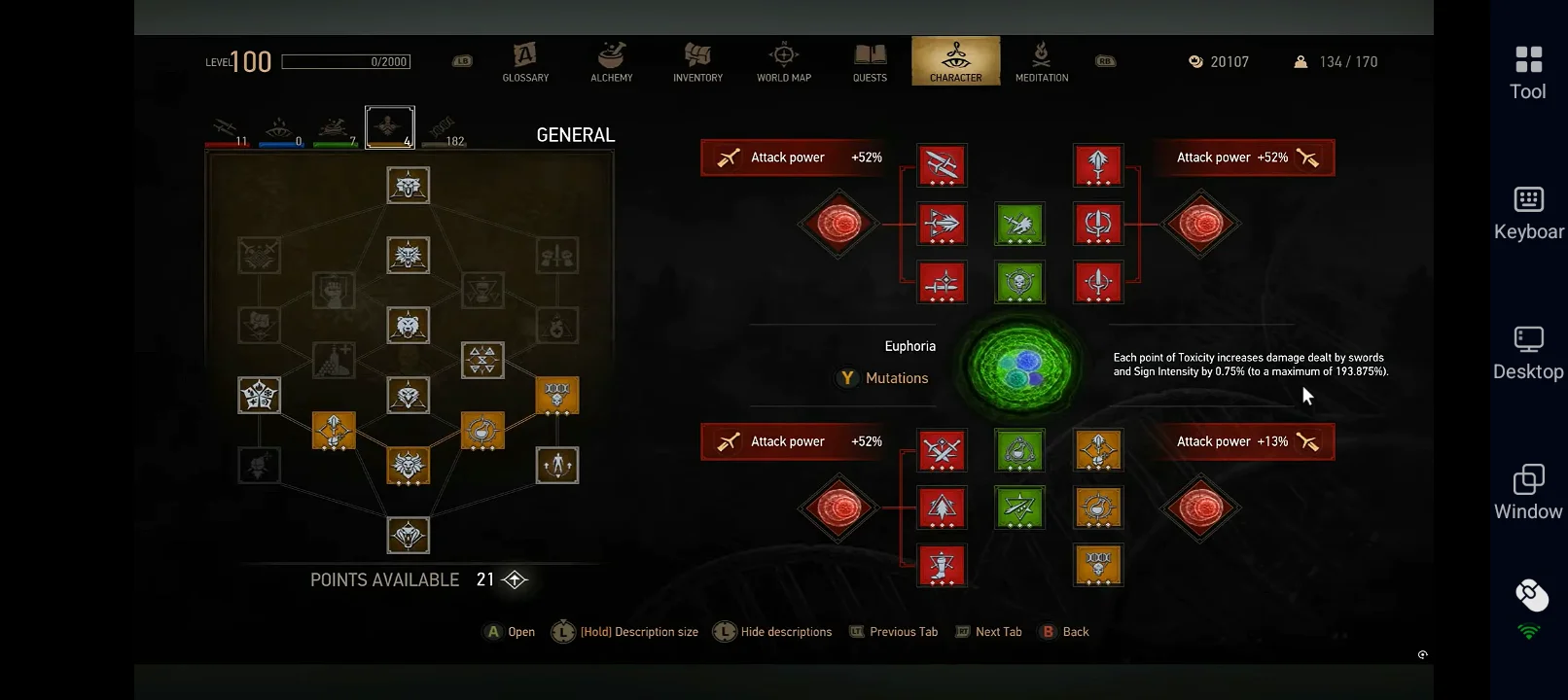
The Heavy Combat Ursine build takes the opposite approach to the Feline setup. Instead of relying on speed and constant repositioning, it focuses on powerful attacks, survivability, and creating openings for heavy strikes. It is a good choice if you prefer a slower, more deliberate combat rhythm and want your armor to provide stronger defensive support.
Build Priorities
|
Category |
Focus |
|
Core Damage |
Strong Attacks |
|
Support |
Heavy-attack damage + Adrenaline |
|
Defense |
Armor + Quen |
|
Mutagen |
Red |
|
Armor |
Ursine |
|
Preparation |
Oils + defensive/utility Potions |
|
Late Game |
Heavy Combat specialization |
Skill progression: Build your Strong Attack foundation first, then invest in Combat skills that increase your damage and support Adrenaline generation. Add defensive options where needed instead of trying to turn the character into an all-purpose build.
Gear progression: Early equipment doesn't need to be specifically Ursine. Once the appropriate Witcher gear becomes available, transition toward Ursine armor to reinforce the build's heavier combat identity. Prioritize useful stats and bonuses rather than keeping an outdated piece simply because it belongs to the set.
Combat: Use Quen when entering a dangerous encounter, look for openings, and commit to powerful attacks rather than constantly attacking. Dodging remains important, but the build gives you more room to survive mistakes than a lighter, aggression-focused setup. Oils and situational potions can further improve the build against difficult enemies.
The finished Ursine build should feel powerful and deliberate: absorb pressure when necessary, wait for an opening, then punish the enemy with heavy attacks. It is less about maintaining constant speed and more about making each attack count.
Build path: Strong Attacks → Combat Damage → Adrenaline Support → Defense → Ursine Gear → Late-Game Specialization
Build #4 — Combat + Alchemy
Playstyle: Sword combat enhanced by oils, potions, decoctions, and Toxicity
Core Focus: Combat + Alchemy
Gear Direction: Manticore / Alchemy-focused gear
Mutagen: Red + Green
Best For: Players who enjoy preparing for fights and gradually building a powerful Alchemy-enhanced swordsman
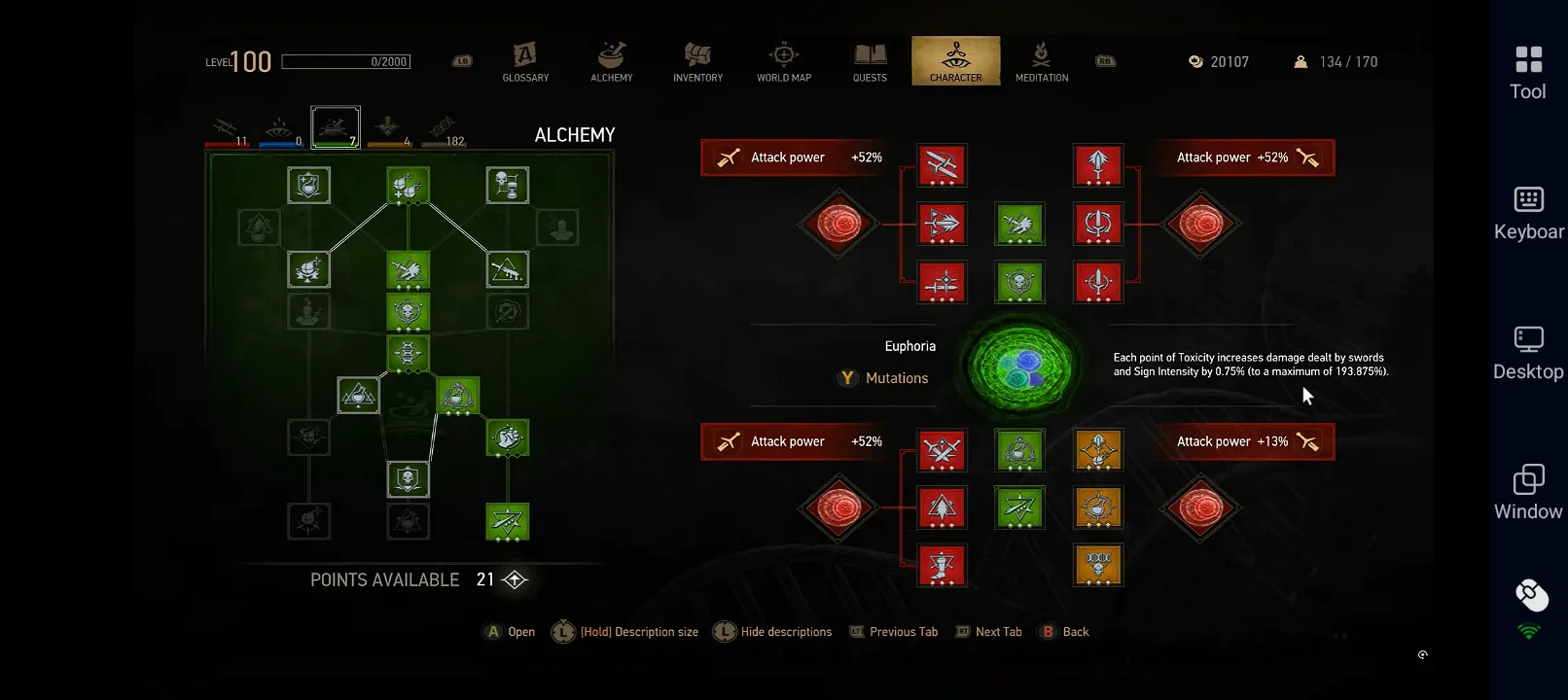
This build combines a strong Combat foundation with Alchemy rather than trying to become a pure potion specialist from the beginning. Early on, your sword skills do most of the work while oils and basic potions provide support. As the character develops, Alchemy becomes increasingly important, eventually allowing you to build around Toxicity, decoctions, and a late-game mutation.
Build Priorities
|
Category |
Focus |
|
Core Damage |
Sword Combat |
|
Support |
Critical/damage + Alchemy |
|
Preparation |
Oils, Potions, Bombs, Decoctions |
|
Defense |
Quen + Alchemy support |
|
Mutagens |
Red + Green |
|
Armor |
Manticore / Alchemy-focused gear |
|
Late Game |
Toxicity + Mutation specialization |
Skill progression: Start with a Combat foundation so the character remains effective without depending on a large collection of potions. As you progress, gradually invest in Alchemy skills that improve your consumables and Toxicity-based setup. This creates a natural transition from swordfighter → prepared Witcher → specialized Combat/Alchemy build.
Gear progression: Don't rush toward Manticore equipment simply because this is an Alchemy build. Use suitable early and mid-game equipment while developing your core skills, then move toward Alchemy-focused gear when the rest of the build is ready to take advantage of it.
Combat preparation: This is where the build separates itself from the previous Combat setups. Before difficult encounters, check the enemy, apply the appropriate oil, choose useful potions, and eventually incorporate decoctions when your Toxicity setup can support them. The goal isn't to consume everything before every fight, but to choose the preparations that complement the encounter.
Late-game direction: Once Combat and Alchemy are both established, you can push the build further into Toxicity management and a suitable mutation. This is where the build can become much more specialized, with Alchemy no longer acting simply as support but becoming part of the character's overall damage and survivability strategy.
The finished build should feel like a prepared Witcher rather than a pure swordsman: your sword remains the main weapon, but oils, potions, decoctions, and Alchemy skills increasingly determine how effectively you approach difficult encounters.
Build path: Combat Foundation → Alchemy Support → Toxicity → Decoctions → Manticore Gear → Late-Game Mutation
Build #5 — Versatile Hybrid
Playstyle: Sword combat supported by Signs and Alchemy
Core Focus: Combat + selected utility
Gear Direction: Wolven / mixed gear
Mutagen: Primarily Red, with supporting Blue or Green investment
Best For: Players who want flexibility without committing completely to one specialization
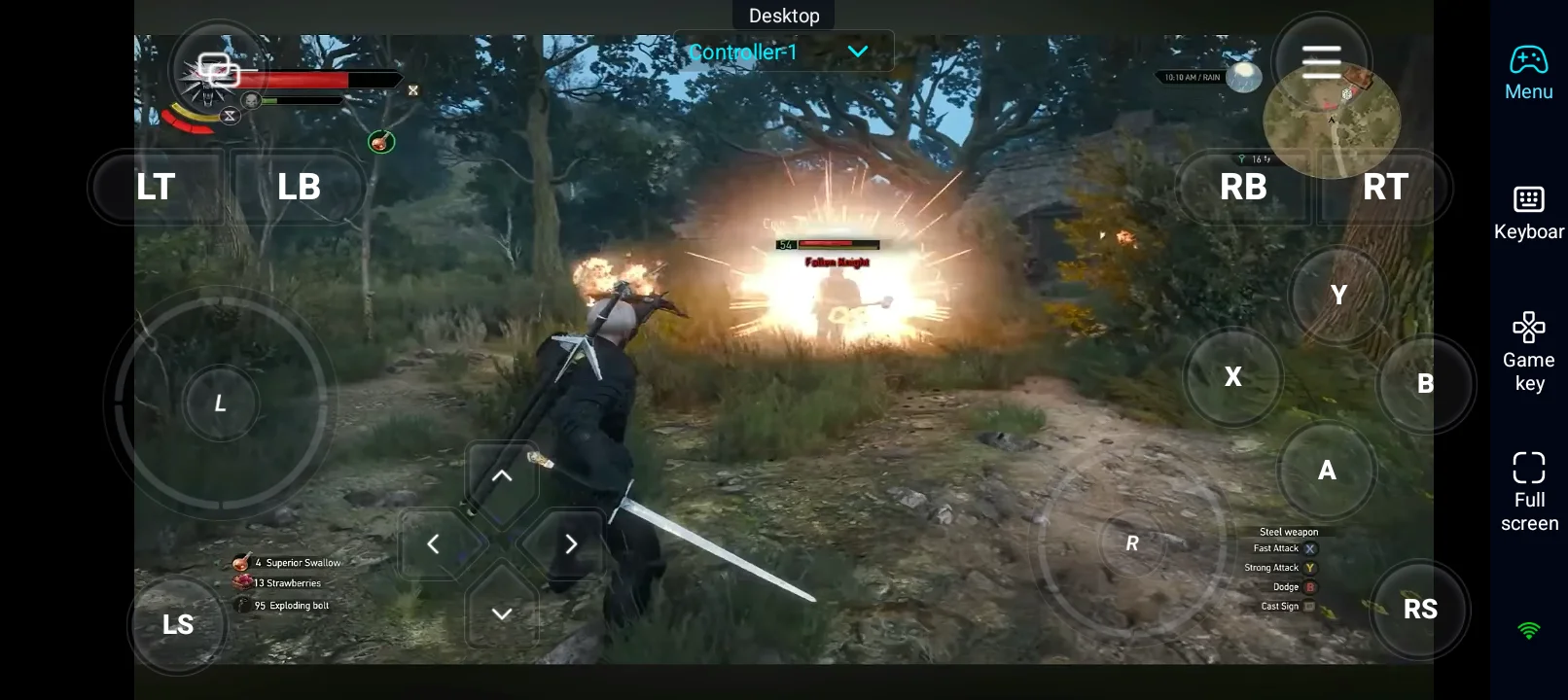
The Versatile Hybrid is designed for players who want Geralt to adapt to different situations instead of relying on a single combat system. Swordplay remains the foundation, while a small selection of Signs and Alchemy tools provides additional options for defense, control, and preparation.
The key is to avoid turning the character into a collection of unrelated skills. Choose one primary combat identity, then use Signs and Alchemy to support it.
Build Priorities
|
Category |
Focus |
|
Core Damage |
Sword Combat |
|
Support |
Selected Signs + Alchemy |
|
Defense |
Quen |
|
Utility |
Aard / Yrden / Oils / Potions |
|
Mutagen |
Primarily Red |
|
Armor |
Wolven / Mixed |
|
Late Game |
Balanced Hybrid specialization |
Skill progression: Establish your Combat foundation first, then choose only the Signs and Alchemy abilities that solve problems your swordplay cannot. Quen is the natural defensive addition, while another Sign can provide crowd control or a situational advantage. Basic Alchemy investment can then give you access to useful oils and potions without turning the character into a full Alchemy build.
Gear progression: Use whatever equipment provides useful bonuses early on, then move toward Wolven gear or a carefully selected mixed setup as the character becomes more specialized. Unlike the Feline, Griffin, or Ursine builds, this setup doesn't need to force every equipment choice into a single category.
Combat: Start fights with your sword as usual, but use your secondary systems when they provide an advantage. Quen can cover defensive situations, another Sign can control enemies, and oils or potions can prepare you for tougher encounters. The strength of this build comes from having the right tool available without constantly changing your entire character.
The finished Hybrid build should feel like a well-rounded Witcher: capable with a sword, comfortable using Signs, and prepared with basic Alchemy. It won't specialize as deeply as the dedicated Feline, Griffin, Ursine, or Combat + Alchemy builds, but it gives you more freedom to adapt your approach throughout the game.
Build path: Combat Foundation → Quen → Selected Sign → Basic Alchemy → Flexible Gear → Hybrid Specialization
Conclusion
The Witcher 3: Wild Hunt – Remastered gives you plenty of room to shape Geralt around your preferred playstyle, but you don't need to have everything figured out from the beginning. Start with a clear combat direction, choose skills and Mutagens that support it, use gear and preparation to strengthen your setup, and refine your build as you progress. Whether you settle into Feline, Griffin, Ursine, Combat + Alchemy, or a Hybrid build, let your character develop naturally as you learn what works best for you. As you continue refining Geralt's build, OSLink lets you play The Witcher 3: Wild Hunt – Remastered on mobile, so you can keep experimenting with skills, gear, and combat setups even when you're away from your PC.
 Download